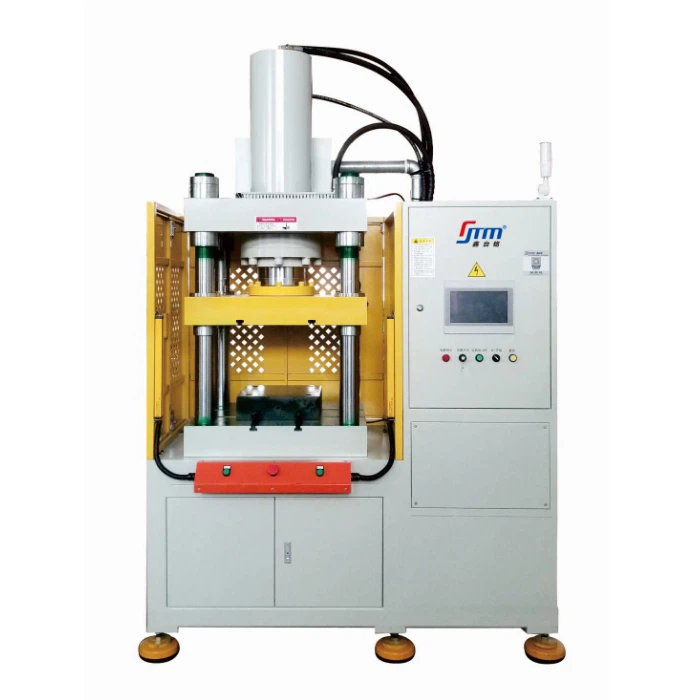
In the field of industrial manufacturing, high precision servo presses have emerged as indispensable tools, offering unparalleled accuracy, repeatability, and efficiency. As a leading supplier of High Precision Servo Press, we understand the critical role that each component plays in the overall performance of these advanced machines. Among these components, the encoder stands out as a key element that significantly influences the precision and functionality of a high precision servo press.
Understanding the Basics of Encoders
Before delving into the specific role of encoders in high precision servo presses, it is essential to understand what encoders are and how they work. An encoder is a device that converts mechanical motion into an electrical signal, providing information about the position, speed, and direction of a moving object. There are two main types of encoders: incremental and absolute.
Incremental encoders generate a series of pulses as the shaft rotates, with each pulse representing a specific angular displacement. By counting these pulses, the controller can determine the relative position and speed of the shaft. However, incremental encoders do not provide information about the absolute position of the shaft, which means that they need to be initialized or homed at the start of each operation.
On the other hand, absolute encoders provide a unique digital code for each position of the shaft, allowing the controller to determine the absolute position of the shaft without the need for homing. This makes absolute encoders more suitable for applications that require high precision and repeatability, such as high precision servo presses.
The Role of Encoders in High Precision Servo Presses
In a high precision servo press, the encoder plays several crucial roles that contribute to the overall performance and accuracy of the machine.
Position Control
One of the primary functions of the encoder in a high precision servo press is to provide accurate position feedback to the servo controller. The servo controller uses this feedback to adjust the position of the press ram, ensuring that it moves to the desired position with high precision. By continuously monitoring the position of the ram, the encoder allows the servo controller to compensate for any errors or deviations, resulting in consistent and accurate pressing operations.
For example, in a stamping operation, the encoder ensures that the press ram moves to the exact position required to form the desired shape in the workpiece. This level of precision is essential for producing high-quality parts with tight tolerances, which is a common requirement in industries such as automotive, aerospace, and electronics.

Speed Control
In addition to position control, the encoder also plays a vital role in speed control. The servo controller uses the encoder feedback to regulate the speed of the press ram, ensuring that it moves at the desired speed throughout the pressing operation. By maintaining a consistent speed, the encoder helps to prevent overloading or underloading of the workpiece, which can lead to defects or damage.
For instance, in a forging operation, the encoder ensures that the press ram moves at a controlled speed to apply the necessary force to deform the workpiece without causing it to crack or break. This requires precise speed control, which is made possible by the accurate feedback provided by the encoder.
Torque Control
Another important function of the encoder in a high precision servo press is torque control. The servo controller uses the encoder feedback to adjust the torque applied to the press ram, ensuring that it applies the correct amount of force to the workpiece. By accurately controlling the torque, the encoder helps to prevent overloading or underloading of the press, which can lead to premature wear and tear or damage to the machine.
For example, in a riveting operation, the encoder ensures that the press ram applies the correct amount of torque to the rivet, ensuring that it is properly seated without causing it to deform or break. This requires precise torque control, which is made possible by the accurate feedback provided by the encoder.
Safety
The encoder also plays a crucial role in ensuring the safety of the high precision servo press. By providing accurate position, speed, and torque feedback, the encoder allows the servo controller to detect any abnormal conditions or malfunctions in the machine. If a problem is detected, the servo controller can immediately stop the press ram to prevent any damage or injury.
For instance, if the encoder detects that the press ram is moving too fast or applying too much force, the servo controller can immediately stop the ram to prevent it from causing damage to the workpiece or the machine. This helps to ensure the safety of the operators and the longevity of the machine.
Types of Encoders Used in High Precision Servo Presses
There are several types of encoders that are commonly used in high precision servo presses, each with its own advantages and disadvantages.
Optical Encoders
Optical encoders are the most commonly used type of encoder in high precision servo presses. They use a light source and a photodetector to detect the movement of a code disk or scale, which is attached to the press ram. Optical encoders offer high resolution, accuracy, and reliability, making them suitable for applications that require high precision and repeatability.
However, optical encoders are sensitive to dust, dirt, and moisture, which can affect their performance. They also require a clean and stable environment to operate effectively, which can limit their use in some industrial applications.
Magnetic Encoders
Magnetic encoders use a magnetic field to detect the movement of a magnetic scale or disk, which is attached to the press ram. Magnetic encoders offer high resolution, accuracy, and reliability, and they are less sensitive to dust, dirt, and moisture than optical encoders. This makes them more suitable for applications that require high precision and repeatability in harsh environments.
However, magnetic encoders are more expensive than optical encoders, and they require a more complex installation process. They also have a lower maximum speed than optical encoders, which can limit their use in some high-speed applications.
Capacitive Encoders
Capacitive encoders use a capacitive sensing technique to detect the movement of a conductive scale or disk, which is attached to the press ram. Capacitive encoders offer high resolution, accuracy, and reliability, and they are less sensitive to dust, dirt, and moisture than optical encoders. They also have a higher maximum speed than magnetic encoders, which makes them suitable for high-speed applications.
However, capacitive encoders are more expensive than optical and magnetic encoders, and they require a more complex installation process. They also have a limited operating temperature range, which can limit their use in some industrial applications.
Conclusion
In conclusion, the encoder plays a crucial role in the performance and accuracy of a high precision servo press. By providing accurate position, speed, and torque feedback, the encoder allows the servo controller to adjust the position, speed, and force of the press ram, ensuring that it moves to the desired position with high precision and repeatability. This results in consistent and accurate pressing operations, which are essential for producing high-quality parts with tight tolerances.
As a leading supplier of High Precision Servo Press, we understand the importance of using high-quality encoders in our machines. That's why we only use the best encoders from reputable manufacturers, ensuring that our presses offer the highest level of precision, reliability, and performance.
If you are interested in learning more about our high precision servo presses or would like to discuss your specific requirements, please feel free to contact us. Our team of experts will be happy to assist you and provide you with the information and support you need to make an informed decision.
References
- "Encoder Basics," AutomationDirect.com
- "Servo Press Technology," Bosch Rexroth AG
- "High Precision Servo Presses: A Comprehensive Guide," Industrial Press Inc.