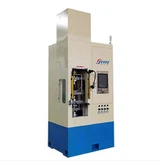
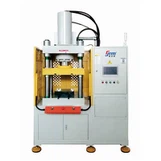
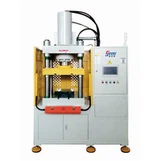
Can a 20 Ton Benchtop Press be used for forging?
As a supplier of 20 Ton Benchtop Presses, I often get asked whether these machines can be used for forging. It's a valid question, especially considering the different applications and capabilities of various presses in the market. In this blog post, I'll delve into the details of using a 20 Ton Benchtop Press for forging, exploring its feasibility, limitations, and potential benefits.
Understanding Forging and the Role of Presses
Forging is a manufacturing process that involves shaping metal by applying compressive forces. This can be done through hammering, pressing, or a combination of both. The goal is to manipulate the metal's grain structure, improving its strength and durability. Presses play a crucial role in forging, as they provide the necessary force to reshape the metal.


There are different types of presses available for forging, including mechanical presses, hydraulic presses, and screw presses. Each type has its own advantages and disadvantages, depending on the specific application and requirements. In the context of a 20 Ton Benchtop Press, we're dealing with a hydraulic press, which uses hydraulic fluid to generate force.
The Capabilities of a 20 Ton Benchtop Press
A 20 Ton Benchtop Press is a relatively compact and versatile machine that can generate up to 20 tons of force. This makes it suitable for a variety of applications, including bending, punching, riveting, and light forging. When it comes to forging, the key factor is the force required to reshape the metal.
The amount of force needed for forging depends on several factors, such as the type of metal, its thickness, and the desired shape. For example, forging a small piece of soft metal like aluminum may require less force compared to forging a larger piece of high-strength steel. In general, a 20 Ton Benchtop Press can handle light forging tasks, such as shaping small metal parts or creating simple forgings.
One of the advantages of using a 20 Ton Benchtop Press for forging is its precision. Hydraulic presses offer smooth and controlled force application, allowing for accurate shaping of the metal. This is particularly important for applications where tight tolerances are required. Additionally, the benchtop design makes it easy to set up and operate in a workshop environment, providing convenience and flexibility.
Limitations of a 20 Ton Benchtop Press for Forging
While a 20 Ton Benchtop Press has its capabilities, it also has some limitations when it comes to forging. The most significant limitation is the amount of force it can generate. Forging larger or thicker pieces of metal may require a press with higher tonnage. For example, heavy forging applications, such as forging large industrial components or automotive parts, typically require presses with tonnages in the hundreds or even thousands.
Another limitation is the size of the work area. Benchtop presses are designed to be compact, which means they have a relatively small work area compared to larger industrial presses. This can restrict the size of the metal pieces that can be forged. If you need to forge larger parts, you may need to consider a larger press or a different forging method.
Potential Benefits of Using a 20 Ton Benchtop Press for Forging
Despite its limitations, there are several potential benefits to using a 20 Ton Benchtop Press for forging. One of the main benefits is cost. Benchtop presses are generally more affordable compared to larger industrial presses, making them a cost-effective option for small businesses or hobbyists. They also require less space, which can be a significant advantage for those with limited workshop space.
Another benefit is the ability to perform small-scale forging operations. If you're involved in custom metalworking or prototyping, a 20 Ton Benchtop Press can be a valuable tool. It allows you to create small batches of forgings quickly and efficiently, without the need for expensive equipment or large production runs.
Considerations for Using a 20 Ton Benchtop Press for Forging
If you're considering using a 20 Ton Benchtop Press for forging, there are a few things to keep in mind. First, make sure you understand the capabilities and limitations of the press. This will help you determine whether it's suitable for your specific forging needs. You should also consider the type of metal you'll be working with and the complexity of the forgings you want to create.
It's also important to use the right tools and dies for forging. The quality of the tools and dies can have a significant impact on the outcome of the forging process. Make sure you invest in high-quality tools and dies that are designed for the specific type of forging you'll be doing.
Finally, safety is always a top priority when working with any type of press. Make sure you follow all safety guidelines and procedures, and wear appropriate safety gear, such as gloves and safety glasses.
Conclusion
In conclusion, a 20 Ton Benchtop Press can be used for forging, but it has its limitations. It's suitable for light forging tasks, such as shaping small metal parts or creating simple forgings. The press offers precision, convenience, and cost-effectiveness, making it a viable option for small businesses or hobbyists. However, if you need to forge larger or thicker pieces of metal, you may need to consider a press with higher tonnage.
If you're interested in learning more about our 20 Ton Benchtop Presses or other Industrial Hydraulic Press Machine options, such as the 10 Ton Electric Hydraulic Press or Small Benchtop Hydraulic Press, please feel free to contact us. We're here to help you find the right press for your forging needs and provide you with the support and expertise you need to succeed.
References
- ASM Handbook, Volume 14A: Metalworking: Forging, ASM International
- Machinery's Handbook, 31st Edition, Industrial Press Inc.
- Forging Technology and Applications, Second Edition, CRC Press