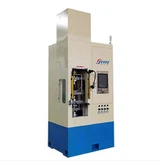
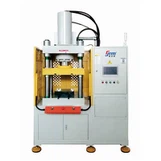
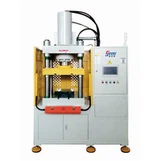
As a supplier of 30 - ton presses, I often get asked whether a 30 - ton press can be used for wood pressing. Well, let's dig into this topic and find out.
First off, what exactly is a 30 - ton press? A 30 - ton press is a powerful machine that can exert a force of 30 tons. It's usually a hydraulic press, which uses hydraulic fluid to generate the force. Hydraulic presses are known for their high power and precision, making them suitable for a wide range of applications.
Now, let's talk about wood pressing. Wood pressing can refer to several things, like compressing wood to make it denser, laminating wood layers together, or shaping wood products. Each of these applications has its own requirements, and whether a 30 - ton press can do the job depends on these factors.


Compressing Wood to Increase Density
When you want to compress wood to make it denser, you're essentially trying to reduce the volume of the wood by squeezing out air and some of the moisture. This can make the wood stronger and more durable.
The amount of force needed to compress wood depends on the type of wood. Hardwoods like oak and maple are more difficult to compress than softwoods like pine. A 30 - ton press can definitely compress softwoods quite effectively. For example, if you're working with pine boards, a 30 - ton press can apply enough force to reduce the thickness and increase the density of the wood.
However, when it comes to hardwoods, a 30 - ton press might reach its limit. Hardwoods have a more compact cellular structure, and they require a much higher force to compress. In some cases, you might need a press with a capacity of 50 tons or more to achieve significant compression in hardwoods.
Laminating Wood Layers
Laminating wood layers is another common wood - pressing application. This involves gluing multiple layers of wood together and then applying pressure until the glue sets. The force required for laminating depends on the size of the laminated piece and the type of glue used.
A 30 - ton press is usually sufficient for laminating small to medium - sized wood products. For instance, if you're making a laminated tabletop or a small wooden cabinet door, a 30 - ton press can provide enough pressure to ensure a strong bond between the layers.
But if you're dealing with large - scale laminating projects, like building a large wooden beam or a massive wooden panel, you might need a more powerful press. The larger the surface area, the more force is needed to evenly distribute the pressure across all the layers and ensure a proper bond.
Shaping Wood Products
Shaping wood products can involve bending, forming, or stamping wood into different shapes. A 30 - ton press can be very useful for some shaping tasks. For example, if you're bending thin strips of wood to create curved furniture parts, a 30 - ton press can apply the necessary force to hold the wood in the desired shape while it dries.
However, for more complex shaping operations, such as deep - drawing or high - pressure stamping of wood, a 30 - ton press might not be enough. These operations often require a higher force to deform the wood without causing it to crack or break.
Advantages of Using a 30 - Ton Press for Wood Pressing
One of the main advantages of using a 30 - ton press for wood pressing is its versatility. It can handle a variety of wood - pressing tasks for small to medium - sized projects. It's also relatively compact and easy to operate compared to larger presses.
Another advantage is cost - effectiveness. A 30 - ton press is generally more affordable than higher - capacity presses. This makes it a great option for small woodworking shops or hobbyists who don't have a large budget but still want to perform some wood - pressing operations.
Limitations of a 30 - Ton Press for Wood Pressing
As mentioned earlier, the main limitation of a 30 - ton press is its limited force capacity. It might not be suitable for large - scale or high - force wood - pressing applications. Also, if you're working with very hard or thick pieces of wood, a 30 - ton press might not be able to provide the necessary force.
Other Considerations
When using a 30 - ton press for wood pressing, there are a few other things to keep in mind. First, you need to make sure that the press has the right platens. The platens are the flat surfaces that come into contact with the wood. They should be smooth and flat to ensure even pressure distribution.
Second, safety is always a concern. A 30 - ton press is a powerful machine, and it can cause serious injuries if not used properly. Make sure to follow all safety guidelines and wear appropriate protective gear when operating the press.
Our 30 - Ton Press Offerings
We offer a range of 30 - ton presses that are well - suited for wood - pressing applications. Our presses are designed with high - quality hydraulic systems that ensure smooth and precise operation. They also come with adjustable pressure settings, so you can customize the force according to your specific wood - pressing needs.
If you're interested in other types of presses, we also have some great options. Check out our Electric Hydraulic Press for Blacksmithing, which is perfect for blacksmiths who need a reliable and powerful press. We also have a Hydraulic Baling Press Machine for those in the recycling or waste - management industry. And if you're looking for a more compact and air - operated option, our Air Operated Hydraulic Press might be just what you need.
Contact Us for More Information
If you're considering using a 30 - ton press for your wood - pressing projects or if you have any questions about our presses, don't hesitate to contact us. We're here to help you find the right solution for your needs. Whether you're a professional woodworker or a hobbyist, we can provide you with the information and support you need to make an informed decision.
References
- "Wood Handbook: Wood as an Engineering Material." U.S. Department of Agriculture, Forest Service, Forest Products Laboratory.
- "Hydraulic Press Technology and Applications." Industrial Press Inc.