Can a 55 Ton Hydraulic Press be used for metal forging?
As a supplier of 55 ton hydraulic presses, I often get asked whether our machines can be used for metal forging. It's a valid question, considering the specific requirements and forces involved in metal forging processes. In this blog post, I'll delve into the capabilities of a 55 ton hydraulic press in the context of metal forging, exploring its suitability, limitations, and potential applications.
Understanding Metal Forging
Metal forging is a manufacturing process that involves shaping metal by applying compressive forces. This is typically done using a hammer or a press to deform the metal into the desired shape. Forging can be used to create a wide range of products, from simple components to complex, high - strength parts used in industries such as automotive, aerospace, and construction.
There are two main types of forging: hot forging and cold forging. Hot forging is carried out at elevated temperatures, usually above the recrystallization temperature of the metal. This makes the metal more malleable and reduces the force required to deform it. Cold forging, on the other hand, is done at room temperature, which results in a stronger and more precise product but requires higher forces.
Capabilities of a 55 Ton Hydraulic Press
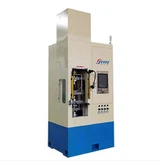
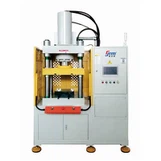
A 55 ton hydraulic press is a powerful machine that can generate a significant amount of force. The "55 ton" refers to the maximum force that the press can exert, which is equivalent to approximately 539,397 Newtons. This force can be used to perform a variety of operations, including bending, punching, stamping, and yes, in some cases, metal forging.
Suitability for Small - Scale Forging
For small - scale metal forging operations, a 55 ton hydraulic press can be a viable option. If you are working with relatively soft metals such as aluminum or brass, and the forgings are small in size and have relatively simple shapes, the press can provide enough force to deform the metal. For example, creating small jewelry components, decorative metal pieces, or simple machine parts can be achievable with a 55 ton hydraulic press.
Precision and Control
One of the advantages of using a hydraulic press for forging is the precise control it offers. Hydraulic systems can be adjusted to apply the exact amount of force required for a particular forging operation. This precision is crucial for achieving consistent results and high - quality products. The press can also be programmed to apply the force gradually, which can be beneficial for preventing cracks and other defects in the forged metal.
Limitations of a 55 Ton Hydraulic Press in Metal Forging
While a 55 ton hydraulic press has its strengths, it also has some limitations when it comes to metal forging.
Limited Force for Large - Scale Forging
When dealing with larger or more complex forgings, especially those made from high - strength metals like steel, a 55 ton press may not have enough force. For example, forging large automotive crankshafts or aerospace components often requires presses with much higher tonnages, sometimes in the thousands of tons. The force required to deform thick sections of high - strength metal can easily exceed the capabilities of a 55 ton press.
Material Thickness and Complexity
The thickness and complexity of the metal part also play a role. If the metal piece is thick, more force is needed to penetrate and deform it. Additionally, complex shapes with multiple bends, protrusions, or internal features may require more force and a more specialized forging process than a 55 ton press can provide.
Potential Applications of a 55 Ton Hydraulic Press in Metal Forging
Despite its limitations, a 55 ton hydraulic press can still find many applications in the metal forging industry.
Prototyping
For companies involved in product development, a 55 ton hydraulic press can be used for prototyping. It allows engineers and designers to quickly create samples of forged parts to test their form, fit, and function. This can save time and money in the development process, as changes can be made to the design based on the prototype results before investing in more expensive tooling and larger - scale production.
Custom Forging
In the custom forging market, where small batches of unique parts are required, a 55 ton press can be a cost - effective solution. For example, a local metalworking shop may use the press to create custom - made brackets, fittings, or small gears for local industries. This flexibility makes the press a valuable asset for businesses that need to produce a variety of small - scale forgings.
Comparison with Other Presses
It's also worth comparing a 55 ton hydraulic press with other types of presses commonly used in metal forging.
50 Ton Press
A 50 Ton Press has a slightly lower maximum force than a 55 ton press. While the difference in tonnage may seem small, it can be significant in some forging applications. A 55 ton press may be able to handle slightly thicker or more difficult - to - forge materials compared to a 50 ton press. However, the 50 ton press may be more suitable for very light - duty forging or when space and cost are major considerations.
Hydraulic Baling Press Machine
A Hydraulic Baling Press Machine is designed primarily for baling materials such as scrap metal, paper, or plastic. While it also uses hydraulic force, its design and function are very different from a forging press. A 55 ton hydraulic press, on the other hand, is specifically engineered for metalworking operations, including forging, and has features such as precision control and tooling compatibility that are not typically found in a baling press.
Stamping Presses
Stamping Presses are used for cutting, punching, and forming metal sheets. While there is some overlap in the operations that a 55 ton hydraulic press and a stamping press can perform, a stamping press is optimized for high - speed, repetitive stamping operations. A 55 ton hydraulic press, with its ability to apply variable force and its suitability for forging, offers more versatility in terms of the types of metalworking operations it can handle.


Conclusion
In conclusion, a 55 ton hydraulic press can be used for metal forging, but its suitability depends on the specific requirements of the forging operation. It is well - suited for small - scale forging of soft metals, prototyping, and custom forging applications. However, it has limitations when it comes to large - scale forging of high - strength metals and complex parts.
If you are considering using a 55 ton hydraulic press for your metal forging needs, it's important to carefully evaluate your requirements, including the type of metal, the size and complexity of the forgings, and the production volume. Our team of experts can help you determine if a 55 ton hydraulic press is the right choice for your business. We offer a range of 55 ton hydraulic presses with different features and configurations to meet your specific needs.
If you're interested in learning more about our 55 ton hydraulic presses or discussing your metal forging requirements, we encourage you to reach out to us. Our sales team is ready to assist you in making an informed decision and ensuring that you get the most suitable equipment for your operations.
References
- Callister, W. D., & Rethwisch, D. G. (2012). Materials Science and Engineering: An Introduction. Wiley.
- Dieter, G. E. (1986). Mechanical Metallurgy. McGraw - Hill.
- Kalpakjian, S., & Schmid, S. R. (2008). Manufacturing Engineering and Technology. Pearson.