Can a precision hydraulic press be used for stamping operations? That's a question I get asked a lot as a supplier of Precision Hydraulic Presses. And the short answer is yes, it can! But let's dive deeper into this topic and explore how these machines work for stamping and what benefits they bring.
First off, let's talk about what a precision hydraulic press is. It's a machine that uses hydraulic pressure to generate force. Unlike mechanical presses, which rely on a mechanical flywheel and crankshaft system, hydraulic presses offer more flexibility in terms of force control and speed. This is because the hydraulic system can be easily adjusted to apply different levels of pressure depending on the requirements of the stamping job.
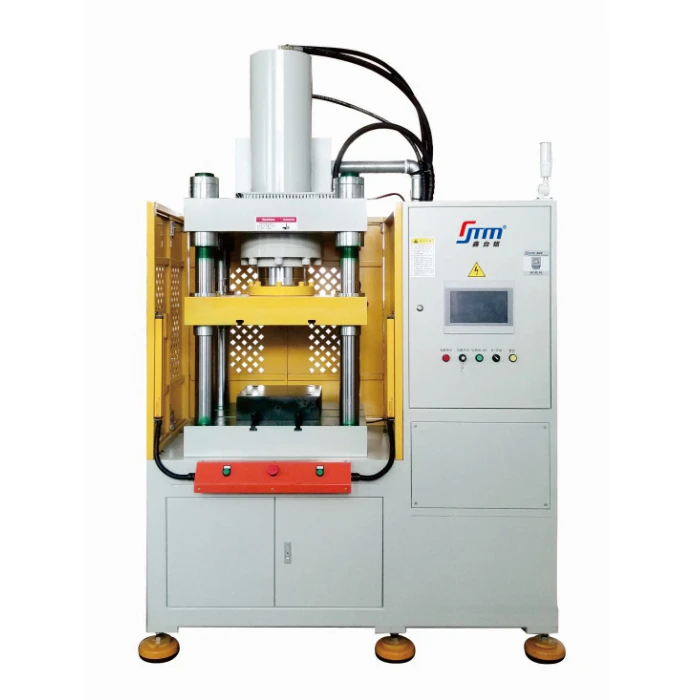

One of the key advantages of using a precision hydraulic press for stamping is the ability to control the force accurately. In stamping operations, the amount of force applied to the material is crucial. Too much force can cause the material to crack or deform, while too little force may result in an incomplete stamp. With a precision hydraulic press, operators can set the exact amount of force needed for each stamping operation, ensuring consistent and high - quality results.
Another benefit is the flexibility in stroke length. The stroke of a press refers to the distance the ram travels from its highest position to its lowest position. In stamping, different jobs may require different stroke lengths. For example, shallow stamping operations may need a shorter stroke, while deep drawing or embossing may require a longer stroke. A precision hydraulic press allows for easy adjustment of the stroke length, making it suitable for a wide range of stamping applications.
Let's take a look at some specific types of stamping operations where a precision hydraulic press shines. One common application is blanking, which is the process of cutting a flat piece of material from a larger sheet. The precise force control of a hydraulic press ensures clean and accurate cuts, reducing waste and improving the overall quality of the blanks.
Piercing is another stamping operation where a precision hydraulic press can be very effective. Piercing involves creating holes in a material. The ability to control the force and speed of the press allows for precise hole diameters and clean edges, which is especially important in industries such as automotive and aerospace, where precision is key.
Now, let's mention some of our products that are great for stamping operations. We have the 50 Ton Electric Hydraulic Press. This press is a workhorse for medium - sized stamping jobs. With its 50 - ton capacity, it can handle a variety of materials, including metals like steel, aluminum, and brass. It offers precise force control and adjustable stroke length, making it a versatile option for different stamping requirements.
Our 4 Post Hydraulic Press is also a popular choice for stamping. The four - post design provides excellent stability, which is crucial for maintaining accuracy during stamping operations. It can be used for both small - scale and large - scale stamping jobs, thanks to its robust construction and powerful hydraulic system. And if you're looking for more information on our 4 Post Hydraulic Press, you can check out this link.
When it comes to the maintenance of precision hydraulic presses for stamping operations, it's relatively straightforward. Regular checks of the hydraulic fluid level, filter replacement, and inspection of seals and hoses are essential to keep the press running smoothly. Most modern precision hydraulic presses also come with diagnostic systems that can alert operators to potential issues before they become major problems.
However, like any machine, there are some considerations when using a precision hydraulic press for stamping. One factor is the speed. Hydraulic presses are generally slower than mechanical presses in terms of cycle time. This may not be a problem for low - volume or high - precision stamping jobs, but for high - volume production, it's something to keep in mind.
Another consideration is the initial cost. Precision hydraulic presses tend to be more expensive than mechanical presses. But when you factor in the long - term benefits such as better quality control, less waste, and the ability to handle a wider range of stamping jobs, the investment can pay off in the long run.
In conclusion, a precision hydraulic press is a great option for stamping operations. Its ability to provide accurate force control, adjustable stroke length, and suitability for a variety of stamping applications make it a valuable asset for any manufacturing facility. Whether you're in the automotive, aerospace, or consumer goods industry, a precision hydraulic press can help you achieve high - quality stamping results.
If you're interested in learning more about our precision hydraulic presses for stamping operations or are looking to make a purchase, we'd love to hear from you. Contact us to start a discussion about your specific stamping needs, and we'll work with you to find the best solution for your business.
References
- "Hydraulic Press Technology Handbook"
- Industry research reports on stamping operations and press technologies