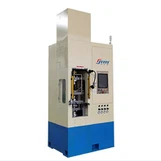
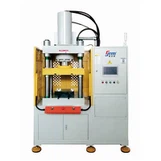
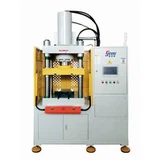
As a dedicated supplier of Hydraulic Hose Presses, I've spent a significant amount of time delving into the intricacies of these machines. One question that often arises in the minds of our customers and industry enthusiasts is, "How accurate is a hydraulic hose press?" In this blog, I'll explore this question in detail, drawing on my experience and knowledge of the field.
Understanding the Basics of a Hydraulic Hose Press
Before we can assess the accuracy of a hydraulic hose press, it's important to understand how it works. A hydraulic hose press is a machine used to assemble hydraulic hoses and fittings. It operates on the principle of hydraulic pressure, which is generated by a hydraulic pump. This pressure is then transferred to a ram, which applies force to a die set. The die set, in turn, compresses the fitting onto the hose, creating a secure and leak - free connection.
The accuracy of a hydraulic hose press is crucial because it directly impacts the quality and safety of the hydraulic hose assemblies. An inaccurate press can lead to under - or over - compression of the fitting, which can result in leaks, premature failure of the hose, and even safety hazards in high - pressure hydraulic systems.
Factors Affecting the Accuracy of a Hydraulic Hose Press
1. Pressure Control
One of the most important factors influencing the accuracy of a hydraulic hose press is its ability to control pressure. Modern hydraulic hose presses are equipped with advanced pressure control systems that allow for precise adjustment of the pressure applied during the crimping process. For example, some presses use digital pressure sensors and controllers to ensure that the pressure remains within a very narrow tolerance range.
The accuracy of pressure control can be affected by factors such as the quality of the hydraulic pump, the calibration of the pressure sensors, and the stability of the power supply. A high - quality hydraulic pump will be able to generate a consistent and accurate pressure, while regular calibration of the pressure sensors is essential to maintain accuracy over time.
2. Die Design and Manufacturing
The dies used in a hydraulic hose press play a critical role in determining the accuracy of the crimping process. The dies must be precisely designed and manufactured to match the specifications of the hose and fitting being used. Any deviation in the die dimensions can lead to inaccurate crimping.
For example, if the die is too large, the fitting may not be compressed enough, resulting in a loose connection. Conversely, if the die is too small, the fitting may be over - compressed, which can damage the hose and reduce its service life. High - quality dies are typically made from hardened steel and are machined to very tight tolerances to ensure accurate and repeatable crimping.
3. Machine Construction and Rigidity
The construction and rigidity of the hydraulic hose press also have a significant impact on its accuracy. A well - built press with a sturdy frame and robust components will be less prone to deflection and vibration during the crimping process. This is important because any movement or vibration can cause the die to shift slightly, resulting in an inaccurate crimp.


For instance, a press with a heavy - duty steel frame will provide better stability compared to a press with a lightweight or poorly constructed frame. Additionally, the alignment of the ram and the die set must be maintained within very tight tolerances to ensure accurate crimping.
Measuring the Accuracy of a Hydraulic Hose Press
There are several ways to measure the accuracy of a hydraulic hose press. One common method is to use a crimp gauge to measure the outside diameter of the crimped fitting. The measured diameter should fall within the specified tolerance range for the particular hose and fitting combination.
Another method is to perform pressure testing on the crimped hose assemblies. By subjecting the assemblies to a specified pressure for a certain period of time, any leaks or failures can be detected. A high - accuracy hydraulic hose press should be able to produce hose assemblies that pass these pressure tests consistently.
Real - World Applications and Accuracy Requirements
In different industries, the accuracy requirements for hydraulic hose presses can vary significantly. For example, in the aerospace and automotive industries, where safety and reliability are of utmost importance, the accuracy requirements are extremely high. Hydraulic hose assemblies used in these industries must meet strict quality standards and undergo rigorous testing.
On the other hand, in some less - critical applications, such as agricultural or construction equipment, the accuracy requirements may be slightly more relaxed. However, even in these applications, a certain level of accuracy is still necessary to ensure the proper functioning of the hydraulic systems.
Our Company's Approach to Ensuring Accuracy
As a supplier of hydraulic hose presses, we take several steps to ensure the accuracy of our products. Firstly, we use only high - quality components in the manufacturing of our presses. Our hydraulic pumps are sourced from reputable manufacturers known for their reliability and accuracy.
Secondly, we have a strict quality control process in place. Every press undergoes a series of tests and inspections before it leaves our factory. This includes pressure testing, die fitment checks, and alignment verification. We also provide our customers with detailed calibration instructions and support to help them maintain the accuracy of their presses over time.
Comparing Different Types of Hydraulic Presses in Terms of Accuracy
20 Ton Hydraulic Press
The 20 Ton Hydraulic Press is a popular choice for many applications. It offers a good balance between power and accuracy. With its relatively high tonnage, it can handle a wide range of hose and fitting sizes. The accuracy of a 20 - ton hydraulic press is often enhanced by its advanced pressure control systems and high - quality dies.
4 Post Hydraulic Press
The 4 Post Hydraulic Press is known for its excellent stability and accuracy. The four - post design provides a rigid and well - balanced structure, which helps to minimize deflection and vibration during the crimping process. This results in more accurate and consistent crimps, making it a preferred choice for applications where high precision is required.
Hydraulic Baling Press Machine
The Hydraulic Baling Press Machine is used for a different purpose compared to hose presses, but it also relies on accurate pressure control and mechanical design. While its accuracy requirements may be different from those of a hose press, the principles of pressure control and die design still apply.
Conclusion
In conclusion, the accuracy of a hydraulic hose press is a complex issue that is influenced by several factors, including pressure control, die design, and machine construction. By understanding these factors and taking appropriate measures to ensure accuracy, we can produce high - quality hydraulic hose assemblies that meet the strictest industry standards.
As a supplier of hydraulic hose presses, we are committed to providing our customers with the most accurate and reliable machines on the market. If you are in the market for a hydraulic hose press or have any questions about the accuracy of our products, please feel free to contact us. We would be more than happy to discuss your specific requirements and help you find the right solution for your business.
References
- "Hydraulic Systems Handbook" by Arthur R. Slocum
- "Industrial Hydraulics Manual" by Peter Nemec