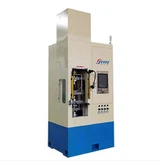
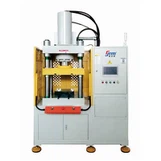
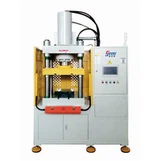
As a supplier of 30 Ton Presses, I've witnessed firsthand the numerous advantages these powerful machines bring to various industries. They are robust, capable of handling heavy-duty tasks, and can significantly boost productivity. However, like any piece of equipment, 30 Ton Presses also have their fair share of disadvantages. In this blog, I'll delve into some of the drawbacks that potential buyers should consider before making a purchase.
High Initial Cost
One of the most significant disadvantages of a 30 Ton Press is its high initial cost. These machines are built to withstand heavy loads and perform complex operations, which requires high - quality materials and advanced manufacturing processes. The cost of research and development, as well as the cost of precision engineering, is reflected in the price tag. For small and medium - sized enterprises (SMEs), the upfront investment can be a major barrier. It may strain the company's budget and limit its ability to invest in other areas such as marketing, research, or employee training.


Compared to smaller presses like the 20 Ton Press, a 30 Ton Press can cost significantly more. The additional capacity comes at a premium, and businesses need to carefully evaluate whether the extra power is truly necessary for their operations. If a company only occasionally needs to perform tasks that require a 30 - ton capacity, it might be more cost - effective to rent a press or opt for a smaller model.
Large Space Requirement
30 Ton Presses are large and bulky machines. They require a significant amount of floor space in a factory or workshop. This can be a problem for businesses with limited space. In a crowded workspace, the press may disrupt the flow of operations, making it difficult for workers to move around and access other equipment.
Moreover, the need for a large space also means higher costs for the business. More space translates to higher rent or mortgage payments if the facility is owned. Additionally, the larger the area occupied by the press, the more energy is required to heat, cool, and light the space. This can lead to increased operational costs over time.
In contrast, smaller presses like the C Frame Press are more compact and can be easily integrated into smaller workspaces without causing major disruptions. They offer a more space - efficient solution for businesses that have space constraints.
Complex Maintenance
Maintaining a 30 Ton Press is a complex and time - consuming task. These presses have numerous moving parts, hydraulic systems, and electrical components that need regular inspection, lubrication, and replacement. The complexity of the machine means that specialized knowledge and skills are required for maintenance.
Businesses may need to hire trained technicians or send their employees for specialized training to perform maintenance tasks. This adds to the overall cost of owning a 30 Ton Press. Moreover, if a breakdown occurs, it can take a long time to diagnose and repair the problem, leading to significant downtime.
Downtime is costly for businesses as it halts production, delays orders, and can damage the company's reputation. In comparison, simpler presses with fewer components are easier to maintain and have shorter repair times. For example, a Hydraulic Line Press may have a more straightforward design, making it less prone to complex breakdowns and easier to maintain.
Safety Risks
30 Ton Presses pose significant safety risks to operators. The high - pressure hydraulic systems and large moving parts can cause serious injuries if not properly operated. Workers need to be trained in safety procedures, wear appropriate protective gear, and follow strict safety protocols at all times.
Even with proper training, accidents can still happen. For example, a malfunction in the hydraulic system could cause the press to suddenly drop or apply excessive force, endangering the operator. Additionally, the large size of the press can create blind spots, making it difficult for operators to see all areas around the machine.
The safety risks associated with 30 Ton Presses also mean that businesses need to invest in safety equipment such as guards, sensors, and emergency stop buttons. These safety measures add to the cost of the press and require regular maintenance to ensure they are functioning properly.
Energy Consumption
30 Ton Presses are energy - intensive machines. The hydraulic systems require a significant amount of power to operate, and the large motors used in these presses consume a lot of electricity. High energy consumption not only leads to higher operational costs but also has an environmental impact.
In today's world, where businesses are increasingly being held accountable for their environmental footprint, the high energy consumption of a 30 Ton Press can be a drawback. Companies may face pressure from customers, investors, and regulatory bodies to reduce their energy usage and carbon emissions.
To mitigate this issue, some manufacturers are developing more energy - efficient presses. However, these models may still be more expensive than traditional presses, and the energy savings may take a long time to offset the additional cost.
Limited Flexibility
A 30 Ton Press is designed for specific types of tasks that require a high amount of force. While it excels at these tasks, it may not be as flexible as smaller or more specialized presses. For example, if a business needs to perform a variety of tasks with different force requirements, a 30 Ton Press may not be the best option.
The large size and high capacity of the press can make it difficult to adjust for smaller or more delicate operations. It may be overkill for tasks that require only a fraction of its capacity, and the precision required for some operations may be difficult to achieve with a large - scale press.
In such cases, a combination of smaller presses or more specialized equipment may be a better solution. This allows businesses to have more flexibility in their operations and can potentially save costs by using the right tool for the job.
Noise Pollution
30 Ton Presses generate a significant amount of noise during operation. The hydraulic pumps, motors, and the impact of the press can create a loud and continuous noise that can be harmful to workers' hearing. Prolonged exposure to high - level noise can lead to hearing loss, stress, and other health problems.
To protect workers, businesses need to provide hearing protection and implement noise - reduction measures such as sound - proof enclosures. These measures add to the cost of the press and may also affect the accessibility and visibility of the machine.
In a workspace, the noise from a 30 Ton Press can also be a distraction, reducing the productivity of workers and creating an unpleasant working environment.
Difficulty in Transportation
Moving a 30 Ton Press is a challenging and expensive task. Due to its large size and weight, special equipment such as cranes and heavy - duty trucks are required for transportation. The process needs to be carefully planned and executed to avoid damage to the press and ensure the safety of the workers involved.
If a business needs to relocate its operations or move the press to a different location within the factory, it can face significant logistical challenges and costs. In contrast, smaller presses are easier to move and can be transported with less hassle and expense.
Conclusion
While 30 Ton Presses offer many advantages in terms of power and capacity, they also come with a number of disadvantages. The high initial cost, large space requirement, complex maintenance, safety risks, energy consumption, limited flexibility, noise pollution, and difficulty in transportation are all factors that potential buyers need to consider.
However, it's important to note that these disadvantages can be mitigated with proper planning, investment in training and safety equipment, and the use of energy - efficient technologies. If a business has a consistent need for high - force operations and has the resources to manage the associated challenges, a 30 Ton Press can be a valuable asset.
If you're considering purchasing a 30 Ton Press or have any questions about our products, we invite you to contact us for a detailed discussion. Our team of experts can help you evaluate your needs, understand the pros and cons, and make an informed decision.
References
- "Industrial Press Handbook" - A comprehensive guide to industrial presses, covering their design, operation, and maintenance.
- "Safety Standards for Hydraulic Presses" - Published by relevant safety organizations, providing guidelines on safe operation and maintenance of hydraulic presses.
- "Energy - Efficient Manufacturing Technologies" - Research papers and reports on the latest technologies to reduce energy consumption in manufacturing processes.