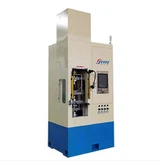
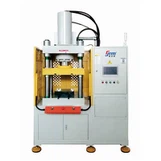
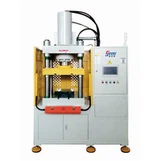
A hot hydraulic press is a piece of heavy - duty machinery widely used in various industries such as metal forming, rubber molding, and composite manufacturing. Understanding the moving parts of a hot hydraulic press and their functions is crucial for professionals in these industries, suppliers like us, and those interested in industrial machinery. In this blog, we'll delve into the key moving components of a hot hydraulic press and explain what each part does.
Hydraulic Cylinder
The hydraulic cylinder is one of the most critical moving parts in a hot hydraulic press. It's the component responsible for generating the force needed to perform pressing operations. The basic principle behind a hydraulic cylinder is Pascal's law, which states that pressure applied to an enclosed fluid is transmitted equally in all directions.
In a hot hydraulic press, the hydraulic cylinder typically consists of a cylindrical tube, a piston, and a piston rod. The piston divides the cylinder into two chambers. When hydraulic fluid is pumped into one of these chambers, it creates pressure that forces the piston to move. As the piston moves, it transfers its motion to the piston rod, which is connected to the press ram.
The movement of the piston and piston rod in the hydraulic cylinder can be either single - acting or double - acting. In a single - acting cylinder, the hydraulic fluid is used to move the piston in one direction, and a spring or gravity is used to return it. Double - acting cylinders, on the other hand, use hydraulic fluid to move the piston in both directions, providing more control and power. Our Hydraulic Line Press is equipped with high - quality double - acting hydraulic cylinders, ensuring efficient and precise operation.
Press Ram
The press ram is connected to the piston rod of the hydraulic cylinder and is responsible for applying the force generated by the cylinder to the workpiece. It's a large, heavy - duty component that moves up and down within the press frame.
When the hydraulic cylinder extends, the press ram moves downward towards the workpiece, exerting high pressure to shape, mold, or compress the material. The ram's design is crucial as it needs to evenly distribute the force across the workpiece. A well - designed ram also helps to minimize wear and tear on the press and the workpiece.
In some hot hydraulic presses, the press ram can be customized according to the specific requirements of the application. For example, rams can be made with different sizes, shapes, and surface finishes to suit various types of workpieces. Our 20 Ton H Frame Press features a precisely machined press ram that ensures accurate and consistent pressing results.
Hydraulic Pump
The hydraulic pump is the heart of the hydraulic system in a hot hydraulic press. Its main function is to convert mechanical energy into hydraulic energy by increasing the pressure of the hydraulic fluid. There are several types of hydraulic pumps used in hot hydraulic presses, including gear pumps, vane pumps, and piston pumps.
Gear pumps are the simplest and most cost - effective type of hydraulic pump. They consist of two meshing gears that rotate within a housing. As the gears rotate, they draw in hydraulic fluid from the reservoir and push it out at high pressure. Vane pumps use vanes that slide in and out of slots in a rotor to create the pumping action. Piston pumps, on the other hand, are the most efficient and can generate high pressures. They use pistons that reciprocate within cylinders to pump the fluid.
The hydraulic pump is driven by an electric motor or an engine. It supplies the hydraulic fluid to the hydraulic cylinder at a regulated pressure and flow rate. This ensures that the press can generate the required force and move at the appropriate speed. Our presses are equipped with high - performance hydraulic pumps that are designed for long - term reliability and efficient operation.
Control Valves
Control valves are used to regulate the flow, pressure, and direction of the hydraulic fluid in the hot hydraulic press. They play a crucial role in controlling the movement of the press ram and ensure safe and precise operation of the machine.
There are several types of control valves used in hot hydraulic presses. Directional control valves are used to control the direction of the hydraulic fluid flow, which in turn controls the movement of the press ram. They can be manually operated, solenoid - operated, or pilot - operated. Pressure control valves, such as relief valves and pressure - reducing valves, are used to regulate the pressure in the hydraulic system. Relief valves protect the system from over - pressure by diverting excess fluid back to the reservoir when the pressure exceeds a set limit.
Flow control valves are used to adjust the flow rate of the hydraulic fluid, which affects the speed of the press ram. By accurately controlling these parameters, control valves allow operators to perform a wide range of pressing operations with different force requirements and speeds. Our 30 Ton Press is fitted with advanced control valves that provide precise control over the press operation.
Platens
Platens are flat, heated surfaces located at the top and bottom of the press. They come into direct contact with the workpiece during the pressing process. The platens transfer the heat and pressure from the press to the material, allowing for the shaping, molding, or curing of the workpiece.
The heating of the platens is usually achieved through electric heating elements or hot oil circulation systems. The temperature of the platens can be precisely controlled to meet the requirements of different materials and processes. For example, in rubber molding, the platens need to be heated to a specific temperature to cure the rubber.
The surface finish and flatness of the platens are also important. A smooth and flat platen surface ensures even heat transfer and uniform pressure distribution across the workpiece, resulting in high - quality finished products. Our hot hydraulic presses are equipped with high - quality platens that are designed for excellent heat transfer and durability.
Workpiece Holding Fixtures
Workpiece holding fixtures are used to secure the workpiece in place during the pressing operation. They prevent the workpiece from moving or shifting, ensuring accurate and consistent results.
These fixtures can be customized according to the shape, size, and requirements of the workpiece. For example, in metal forming applications, fixtures may be designed to hold sheet metal or complex - shaped parts. In composite manufacturing, fixtures are used to hold the composite materials in the correct position during curing.
The design of the workpiece holding fixtures also takes into account factors such as ease of loading and unloading the workpiece, as well as resistance to the high pressures and temperatures within the press. Well - designed fixtures can improve the efficiency and productivity of the hot hydraulic press.


Importance of Understanding Moving Parts
As a hot hydraulic press supplier, we understand the importance of a comprehensive knowledge of the moving parts and their functions. For our customers, this understanding helps in proper machine selection, operation, and maintenance. When customers know how each part works, they can choose the press that best suits their specific application requirements.
Proper operation of the hot hydraulic press is also ensured when operators have a good understanding of the moving parts. They can set the correct pressure, temperature, and speed settings based on the capabilities of the machine's components. Additionally, understanding the moving parts is crucial for routine maintenance and troubleshooting. By knowing the functions of each part, operators can identify and solve problems quickly, reducing downtime and maintenance costs.
Contact Us for Your Hot Hydraulic Press Needs
If you're in the market for a hot hydraulic press, our team of experts is here to assist you. We offer a wide range of hot hydraulic presses, including Hydraulic Line Press, 20 Ton H Frame Press, and 30 Ton Press. Our presses are built with high - quality components and advanced technology to ensure reliable and efficient performance.
Contact us to discuss your specific requirements and let us help you find the perfect hot hydraulic press for your business. We're committed to providing the best products and services to meet your industrial needs.
References
- Smith, J. (2018). Industrial Hydraulic Presses: Design and Operation. Publisher A.
- Johnson, R. (2019). Hydraulic Systems in Manufacturing. Publisher B.
- Davis, M. (2020). Hot Forming Processes and Equipment. Publisher C.