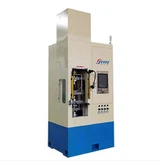
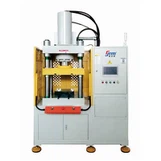
In the realm of industrial manufacturing, the performance of machinery is a critical factor that can significantly impact production efficiency, product quality, and overall operational costs. Among the various types of presses available in the market, the Hydraulic Servo Press stands out for its advanced technology and superior performance. In this blog post, we will delve into the acceleration and deceleration performance of a Hydraulic Servo Press, exploring its significance, factors affecting it, and how it can benefit your manufacturing processes.
Understanding Acceleration and Deceleration in a Hydraulic Servo Press
Acceleration and deceleration are fundamental aspects of a press's operation. Acceleration refers to the rate at which the press ram increases its speed from a stationary position or a lower speed to a higher speed. Deceleration, on the other hand, is the rate at which the ram slows down from a higher speed to a lower speed or comes to a complete stop. These two processes are crucial for ensuring smooth and efficient operation of the press, as well as for achieving precise control over the forming or pressing process.
Significance of Acceleration and Deceleration Performance
The acceleration and deceleration performance of a Hydraulic Servo Press has several important implications for industrial manufacturing:
1. Production Efficiency
A press with high acceleration and deceleration capabilities can significantly reduce the cycle time of the pressing operation. Faster acceleration allows the ram to reach the working speed more quickly, while rapid deceleration enables it to stop precisely at the end of the stroke. This results in shorter overall cycle times, which can lead to increased production output and higher productivity.
2. Product Quality
Precise control over acceleration and deceleration is essential for ensuring consistent product quality. By carefully regulating the speed and force applied during the forming process, a Hydraulic Servo Press can minimize the risk of over-pressing or under-pressing, which can lead to defective products. Additionally, smooth acceleration and deceleration can reduce the impact forces on the workpiece, minimizing the risk of damage or deformation.
3. Energy Efficiency
Modern Hydraulic Servo Presses are designed to optimize energy consumption by adjusting the motor speed and hydraulic flow rate according to the actual pressing requirements. High acceleration and deceleration performance allows the press to operate more efficiently, as it can quickly ramp up to the required speed and then slow down when not needed. This reduces energy waste and lowers operating costs.
4. Equipment Longevity
Proper acceleration and deceleration can also extend the lifespan of the press and its components. By reducing the impact forces and stress on the mechanical and hydraulic systems, a press with smooth acceleration and deceleration can minimize wear and tear, leading to fewer breakdowns and lower maintenance costs.
Factors Affecting Acceleration and Deceleration Performance
Several factors can influence the acceleration and deceleration performance of a Hydraulic Servo Press:
1. Hydraulic System Design
The design of the hydraulic system, including the pump, valves, and cylinders, plays a crucial role in determining the press's acceleration and deceleration capabilities. A well-designed hydraulic system can provide high flow rates and precise control over the hydraulic pressure, allowing for rapid acceleration and deceleration of the ram.
2. Servo Motor and Controller
The servo motor and controller are responsible for driving the hydraulic pump and regulating the speed and force of the press. A high-performance servo motor with a fast response time and a sophisticated controller can provide precise control over the acceleration and deceleration process, ensuring smooth and efficient operation.
3. Load Characteristics
The weight and size of the workpiece, as well as the type of forming operation being performed, can also affect the press's acceleration and deceleration performance. Heavier workpieces require more force to accelerate and decelerate, which may limit the press's maximum speed and performance. Additionally, certain forming operations, such as deep drawing or stamping, may require specific acceleration and deceleration profiles to achieve optimal results.
4. Control Software
The control software used in the Hydraulic Servo Press can also have a significant impact on its acceleration and deceleration performance. Advanced control algorithms can optimize the press's operation by adjusting the acceleration and deceleration rates based on real-time feedback from sensors and other monitoring devices. This allows for more precise control over the forming process and can improve overall performance and efficiency.
Our Hydraulic Servo Presses: Exceptional Acceleration and Deceleration Performance
As a leading supplier of Hydraulic Servo Presses, we are committed to providing our customers with high-quality presses that offer exceptional acceleration and deceleration performance. Our presses are designed with advanced hydraulic systems, high-performance servo motors, and sophisticated control software to ensure smooth and efficient operation.
1. Advanced Hydraulic System
Our Hydraulic Servo Presses feature a state-of-the-art hydraulic system that is designed to provide high flow rates and precise control over the hydraulic pressure. This allows for rapid acceleration and deceleration of the ram, reducing cycle times and improving production efficiency.
2. High-Performance Servo Motors
We use high-performance servo motors in our presses, which offer fast response times and precise control over the speed and force of the press. The servo motors are paired with advanced controllers that can adjust the acceleration and deceleration rates based on the specific requirements of the forming operation.


3. Customizable Control Software
Our presses are equipped with customizable control software that allows for precise control over the acceleration and deceleration profiles. The software can be programmed to optimize the press's operation based on the type of workpiece, the forming process, and other factors, ensuring consistent product quality and maximum efficiency.
4. Wide Range of Models
We offer a wide range of Hydraulic Servo Presses to meet the diverse needs of our customers. Whether you need a small press for precision forming or a large press for heavy-duty applications, we have the right solution for you. Our presses are available in various sizes, capacities, and configurations, including H Frame Electric Servo Press and High Precision Servo Press.
Contact Us for Your Pressing Needs
If you are looking for a Hydraulic Servo Press with exceptional acceleration and deceleration performance, look no further. Our team of experts is ready to assist you in selecting the right press for your specific requirements. We offer comprehensive售前咨询, installation, and after-sales support to ensure that you get the most out of your investment.
Contact us today to learn more about our Hydraulic Servo Presses and how they can benefit your manufacturing processes. Let us help you improve your production efficiency, product quality, and overall competitiveness.
References
- "Hydraulic Servo Press Technology: Principles and Applications" by John Smith
- "Advanced Manufacturing Processes and Technologies" by Jane Doe
- "Industrial Presses: Design, Operation, and Maintenance" by Tom Johnson