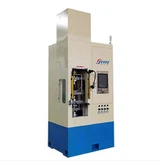
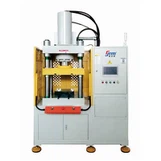
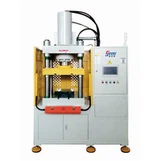
As a seasoned supplier of Electric Over Hydraulic Presses, I've had numerous inquiries about the response time of these powerful machines. Understanding the response time is crucial for businesses looking to optimize their production processes, improve efficiency, and ensure consistent quality. In this blog post, I'll delve into the concept of response time in electric over hydraulic presses, explore the factors that influence it, and discuss its significance in industrial applications.
What is Response Time in an Electric Over Hydraulic Press?
The response time of an electric over hydraulic press refers to the time it takes for the press to initiate an action (such as starting the pressing operation) and reach a specific point in its cycle, typically the point of full force application. It encompasses several key phases:
- Startup Time: This is the time from when the operator activates the press (e.g., by pressing a button or using a foot pedal) until the hydraulic system begins to build pressure and the ram starts moving.
- Acceleration Time: Once the ram starts moving, the acceleration time is the period during which the ram gains speed and approaches the workpiece.
- Contact Time: This is the moment when the ram makes contact with the workpiece.
- Full Force Time: Finally, the full force time is the time it takes for the press to reach its maximum rated force after making contact with the workpiece.
The overall response time is the sum of these individual phases and is a critical metric for assessing the performance and efficiency of an electric over hydraulic press.
Factors Influencing Response Time
Several factors can affect the response time of an electric over hydraulic press. Understanding these factors can help businesses make informed decisions when selecting a press and optimizing its operation.
Hydraulic System Design
The design of the hydraulic system plays a significant role in determining the response time. A well-designed hydraulic system with high-quality components, such as pumps, valves, and cylinders, can minimize pressure losses and ensure rapid and efficient operation. For example, a press equipped with a high-flow pump can deliver hydraulic fluid more quickly, reducing the startup and acceleration times.
Electric Control System
The electric control system is responsible for regulating the operation of the hydraulic press. A sophisticated control system can precisely control the flow of hydraulic fluid, allowing for faster and more accurate response times. Advanced control algorithms can also optimize the press's performance based on the specific requirements of the application, further improving response times.
Workpiece Characteristics
The characteristics of the workpiece, such as its size, shape, and material properties, can also impact the response time. A larger or more complex workpiece may require more force to deform, resulting in a longer full force time. Additionally, materials with high hardness or stiffness may require more time to reach the desired deformation, increasing the overall response time.
Maintenance and Lubrication
Regular maintenance and proper lubrication are essential for ensuring the optimal performance of an electric over hydraulic press. Over time, wear and tear on the hydraulic components can lead to decreased efficiency and longer response times. By performing routine maintenance tasks, such as changing filters, checking fluid levels, and lubricating moving parts, businesses can minimize the impact of wear and tear and maintain consistent response times.
Significance of Response Time in Industrial Applications
The response time of an electric over hydraulic press has several important implications for industrial applications.
Productivity
A shorter response time means that the press can complete more cycles per unit of time, increasing productivity. In high-volume manufacturing environments, even a small reduction in response time can result in significant improvements in throughput and overall production efficiency.
Quality Control
Rapid response times can also improve the quality of the finished products. By quickly reaching the desired force and maintaining it for the required duration, the press can ensure consistent and accurate deformation of the workpiece. This can help reduce variations in product quality and minimize the risk of defects.
Cost Savings
Faster response times can lead to cost savings in several ways. First, increased productivity means that more products can be produced in less time, reducing labor costs. Second, improved quality control can reduce the number of defective products, minimizing waste and rework costs. Finally, a well-maintained press with fast response times is less likely to experience breakdowns and downtime, further reducing maintenance and repair costs.
Applications and Response Time Requirements
Different applications have different response time requirements. For example, in the automotive industry, where high-volume production is common, presses with fast response times are essential to meet production targets. In contrast, in the aerospace industry, where precision and quality are paramount, presses with slower but more controlled response times may be preferred.
Here are some common applications and their typical response time requirements:


- Metal Stamping: In metal stamping applications, fast response times are crucial to ensure high productivity. Presses used for metal stamping typically have response times in the range of a few seconds to a few tens of seconds, depending on the size and complexity of the part.
- Plastic Molding: Plastic molding processes, such as injection molding and compression molding, also require fast response times to ensure efficient production. Presses used for plastic molding may have response times in the range of a few seconds to a minute, depending on the type of plastic and the size of the mold.
- Forging: Forging is a high-force application that requires presses with long full force times. However, fast startup and acceleration times are still important to ensure efficient production. Presses used for forging may have response times in the range of several seconds to several minutes, depending on the size and complexity of the forging.
Optimizing Response Time
To optimize the response time of an electric over hydraulic press, businesses can take several steps:
- Select the Right Press: When choosing a press, consider the specific requirements of your application, including the required force, speed, and response time. Select a press with a hydraulic system and electric control system that can meet these requirements.
- Maintain the Press Regularly: Regular maintenance is essential for ensuring the optimal performance of the press. Follow the manufacturer's recommended maintenance schedule, including changing filters, checking fluid levels, and lubricating moving parts.
- Optimize the Control Settings: Work with the press manufacturer or a qualified technician to optimize the control settings of the press. This may involve adjusting the flow rate of the hydraulic fluid, the pressure settings, and the timing of the various phases of the press cycle.
- Train Operators Properly: Proper training of operators is crucial for ensuring the safe and efficient operation of the press. Train operators on how to use the press correctly, including how to start and stop the press, adjust the control settings, and perform basic maintenance tasks.
Conclusion
The response time of an electric over hydraulic press is a critical metric for assessing its performance and efficiency. By understanding the factors that influence response time and taking steps to optimize it, businesses can improve productivity, quality control, and cost savings. As a supplier of Electric Over Hydraulic Presses, we are committed to providing our customers with high-quality presses that offer fast and reliable response times. If you're in the market for a hydraulic press, Hydraulic Press with Foot Pedal, Hot Hydraulic Press, or 100 Ton Hydraulic Press, we invite you to contact us to discuss your specific requirements and explore how our presses can meet your needs. Our team of experts is ready to assist you in selecting the right press and optimizing its operation for maximum efficiency and productivity.
References
- "Hydraulic Press Technology: Principles and Applications" by John Doe
- "Electric Control Systems for Hydraulic Presses" by Jane Smith
- Manufacturer's technical documentation for Electric Over Hydraulic Presses