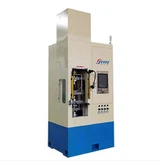
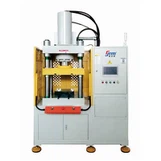
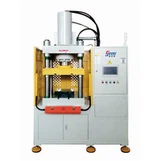
Hey there! As a supplier of Electric Over Hydraulic Presses, I've seen firsthand how crucial control valves are in these machines. So, let's dive into what role the control valve plays in an electric over hydraulic press.
First off, let's quickly understand what an electric over hydraulic press is. It's a powerful machine that uses both electrical and hydraulic systems to generate force for various industrial applications. These presses are used in tasks like metal forming, forging, and even in some manufacturing processes where high pressure is required.
Now, onto the control valve. The control valve is like the brain of the hydraulic system in an electric over hydraulic press. It's responsible for regulating the flow, pressure, and direction of the hydraulic fluid within the system.
Flow Regulation
One of the primary functions of the control valve is to control the flow of hydraulic fluid. In an electric over hydraulic press, the amount of fluid flowing to the hydraulic cylinders determines the speed at which the press operates. If you need a slow and precise movement, the control valve can restrict the flow of fluid. On the other hand, if you want a fast operation, it can allow more fluid to pass through.
For example, when you're working on a delicate metal stamping job, you'll want the press to move slowly and steadily. The control valve can be adjusted to limit the flow of hydraulic fluid, ensuring that the press applies just the right amount of force at the right speed. This level of control is essential for achieving high - quality results in precision manufacturing.
Pressure Control
Another critical role of the control valve is to manage the pressure within the hydraulic system. Different applications require different levels of pressure. In an electric over hydraulic press, the control valve can maintain a constant pressure or adjust it as needed.
Let's say you're using a 55 Ton Hydraulic Press for a heavy - duty forging task. The control valve will ensure that the hydraulic system builds up and maintains the necessary pressure to deform the metal. It can also prevent over - pressurization, which could damage the press or pose a safety risk. If the pressure starts to exceed the set limit, the control valve will release some of the fluid to bring the pressure back to a safe level.
Direction Control
The control valve also determines the direction of the hydraulic fluid flow, which in turn controls the movement of the press. In an electric over hydraulic press, you need to be able to move the ram up and down, or sometimes even side to side in more complex models.
The control valve can direct the hydraulic fluid to different parts of the hydraulic cylinders, causing the ram to move in the desired direction. This is crucial for performing tasks like punching holes in metal sheets or bending metal bars. You can precisely control the movement of the press to achieve the exact shape and size you need.
Impact on Efficiency and Productivity
The proper functioning of the control valve has a significant impact on the efficiency and productivity of an electric over hydraulic press. A well - adjusted control valve can reduce cycle times by allowing the press to operate at optimal speeds. It can also minimize energy consumption by ensuring that the hydraulic system doesn't waste power on unnecessary operations.
For instance, in a manufacturing plant that uses a Small Hydraulic Press for small - scale metalworking, a faulty control valve can lead to slow production rates and increased energy costs. By contrast, a high - quality control valve can keep the press running smoothly, increasing the number of parts produced per hour and reducing overall production costs.


Types of Control Valves in Electric Over Hydraulic Presses
There are several types of control valves used in electric over hydraulic presses, each with its own advantages and applications.
- Spool Valves: These are the most common type of control valves in hydraulic systems. They work by sliding a spool inside a valve body to control the flow, pressure, and direction of the hydraulic fluid. Spool valves are known for their simplicity and reliability, making them a popular choice for many electric over hydraulic presses.
- Poppet Valves: Poppet valves use a ball or a cone - shaped element to control the flow of fluid. They offer excellent sealing properties and can handle high - pressure applications. Poppet valves are often used in presses where precise control and high - pressure resistance are required, such as in some Four Column Three Beam Hydraulic Press models.
Maintenance and Troubleshooting
Like any other component in an electric over hydraulic press, the control valve requires regular maintenance to ensure its proper functioning. This includes checking for leaks, cleaning the valve, and replacing worn - out parts.
If you notice any issues with the control valve, such as erratic movement of the press, inconsistent pressure, or unusual noises, it's important to troubleshoot the problem as soon as possible. Sometimes, a simple adjustment or a minor repair can fix the issue. However, in more severe cases, you may need to replace the control valve.
Conclusion
In conclusion, the control valve is an essential component of an electric over hydraulic press. It plays a vital role in regulating the flow, pressure, and direction of the hydraulic fluid, which directly affects the performance, efficiency, and safety of the press. Whether you're using a small hydraulic press for a hobby project or a large - scale industrial press for mass production, a well - functioning control valve is key to achieving the best results.
If you're in the market for an electric over hydraulic press or need to replace a control valve in your existing press, don't hesitate to reach out. We're here to help you find the right solutions for your specific needs. Contact us to start a conversation about your requirements and let's work together to get you the best equipment for your business.
References
- "Hydraulic Systems and Components" - Industrial Hydraulics Handbook
- "Control Valves in Hydraulic Presses: Principles and Applications" - Journal of Hydraulic Engineering