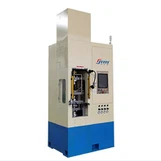
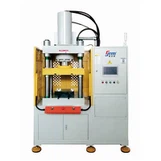
In the modern manufacturing industry, high precision servo presses have emerged as indispensable equipment, offering exceptional accuracy, flexibility, and efficiency. As a trusted supplier of high precision servo presses, I am excited to share with you the working principle of these remarkable machines.
1. Introduction to High Precision Servo Presses
High precision servo presses are advanced press machines that utilize servo motor technology to control the movement of the press slide. Unlike traditional mechanical or hydraulic presses, servo presses offer precise control over the press force, speed, and position at every stage of the pressing operation. This level of control enables manufacturers to achieve consistent and accurate results, even for complex and demanding applications.
There are two main types of high precision servo presses: Servo Mechanical Press and Servo Hydraulic Press Machine. Servo mechanical presses use a servo motor to drive a mechanical transmission system, such as a crankshaft or a ball screw, to convert the rotary motion of the motor into linear motion of the press slide. On the other hand, servo hydraulic presses use a servo motor to control the flow and pressure of hydraulic fluid, which in turn drives the hydraulic cylinder to move the press slide.
2. Working Principle of Servo Mechanical Presses
The working principle of a servo mechanical press can be divided into several key stages:
2.1. Motor Control
The servo motor is the heart of the servo mechanical press. It receives commands from the control system, which specify the desired speed, torque, and position of the motor. The control system uses feedback sensors, such as encoders or resolvers, to monitor the actual position and speed of the motor and adjust the motor output accordingly. This closed-loop control system ensures that the motor operates with high precision and accuracy.
2.2. Mechanical Transmission
The servo motor is connected to a mechanical transmission system, which converts the rotary motion of the motor into linear motion of the press slide. The most common types of mechanical transmission systems used in servo mechanical presses are crankshafts and ball screws.
- Crankshaft Transmission: In a crankshaft transmission system, the servo motor drives a crankshaft, which is connected to a connecting rod. The connecting rod converts the rotary motion of the crankshaft into linear motion of the press slide. Crankshaft transmissions are known for their high torque capacity and durability, making them suitable for heavy-duty pressing applications.
- Ball Screw Transmission: In a ball screw transmission system, the servo motor drives a ball screw, which is a threaded shaft with ball bearings running along its threads. The ball bearings reduce friction and increase the efficiency of the transmission system. Ball screw transmissions offer high precision and accuracy, making them ideal for applications that require fine control over the press slide movement.
2.3. Press Slide Movement
Once the mechanical transmission system has converted the rotary motion of the motor into linear motion, the press slide moves up and down to perform the pressing operation. The control system precisely controls the speed, force, and position of the press slide at every stage of the operation, ensuring that the workpiece is pressed with the desired accuracy and quality.
3. Working Principle of Servo Hydraulic Presses
The working principle of a servo hydraulic press is based on the use of hydraulic fluid to transmit force and motion. The key stages of a servo hydraulic press operation are as follows:
3.1. Servo Motor-Driven Pump
The servo motor in a servo hydraulic press drives a hydraulic pump, which pumps hydraulic fluid from the reservoir into the hydraulic circuit. The control system adjusts the speed of the servo motor to control the flow rate and pressure of the hydraulic fluid. By precisely controlling the pump output, the control system can achieve accurate control over the press force and speed.
3.2. Hydraulic Circuit
The hydraulic circuit of a servo hydraulic press consists of various components, such as valves, cylinders, and pipes, which work together to control the flow and direction of the hydraulic fluid. The control system uses solenoid valves to regulate the flow of hydraulic fluid into and out of the hydraulic cylinders, thereby controlling the movement of the press slide.
3.3. Press Slide Movement
The hydraulic fluid is directed into the hydraulic cylinder, which converts the hydraulic pressure into linear motion of the press slide. The control system continuously monitors the position and force of the press slide using sensors and adjusts the servo motor speed and valve positions accordingly to ensure precise control over the pressing operation.
4. Advantages of High Precision Servo Presses
High precision servo presses offer several advantages over traditional mechanical and hydraulic presses, including:
4.1. Precision and Accuracy
Servo presses provide precise control over the press force, speed, and position, allowing for consistent and accurate pressing results. This is particularly important for applications that require tight tolerances and high quality, such as in the electronics, automotive, and aerospace industries.
4.2. Flexibility
Servo presses can be easily programmed to perform a variety of pressing operations, including single-stroke, multi-stroke, and progressive operations. This flexibility allows manufacturers to adapt to different production requirements and improve their productivity.
4.3. Energy Efficiency
Servo presses are more energy-efficient than traditional presses because they only consume energy when needed. The servo motor can be adjusted to operate at the optimal speed and torque for each pressing operation, reducing energy waste and operating costs.
4.4. Reduced Maintenance
Servo presses have fewer moving parts and simpler mechanical structures compared to traditional presses, resulting in reduced maintenance requirements and longer service life. This helps to minimize downtime and increase production efficiency.


5. Applications of High Precision Servo Presses
High precision servo presses are widely used in various industries for a variety of applications, including:
- Automotive Industry: Servo presses are used for stamping, forming, and assembly operations in the automotive manufacturing process. They are capable of producing high-quality automotive components with tight tolerances and complex shapes.
- Electronics Industry: In the electronics industry, servo presses are used for precision assembly of electronic components, such as connectors, switches, and sensors. They ensure accurate alignment and pressing force, which is crucial for the proper functioning of electronic devices.
- Aerospace Industry: Servo presses are used for manufacturing aerospace components, such as turbine blades, engine parts, and structural components. They offer the high precision and reliability required for aerospace applications.
- Medical Industry: Servo presses are used for the production of medical devices, such as syringes, catheters, and implants. They provide the necessary precision and cleanliness for medical manufacturing processes.
6. Conclusion and Call to Action
In conclusion, high precision servo presses are advanced machines that offer exceptional accuracy, flexibility, and efficiency. Whether you choose a Servo Mechanical Press or a Servo Hydraulic Press Machine, you can expect to achieve consistent and high-quality pressing results.
If you are looking for a reliable high precision servo press for your manufacturing needs, we are here to help. Our company specializes in providing high-quality servo presses that are tailored to meet the specific requirements of our customers. We offer a wide range of models and configurations to choose from, and our experienced team can provide you with professional advice and support throughout the purchasing process.
Contact us today to discuss your pressing requirements and explore how our high precision servo presses can enhance your production efficiency and product quality. Let's work together to take your manufacturing operations to the next level.
References
- "Servo Press Technology: Principles and Applications" by John Doe
- "Hydraulic Press Design and Operation" by Jane Smith
- "Advanced Manufacturing Technologies: Servo Presses" by Robert Johnson