In the world of metalworking and manufacturing, the process of upsetting plays a crucial role in shaping and strengthening metal components. Upsetting is a forging operation in which the cross - sectional area of a workpiece is increased by reducing its length. This process is often used to make heads on bolts, rivets, and other fasteners, as well as to strengthen parts by work - hardening the material. As a precision hydraulic press supplier, I am often asked whether our precision hydraulic presses can be used for upsetting operations. In this blog post, I will explore this question in depth.
Understanding Precision Hydraulic Presses
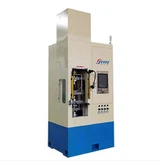
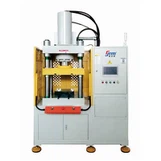
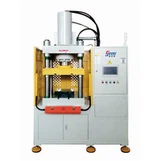
Precision hydraulic presses are machines that use hydraulic cylinders to generate a large amount of force. This force is applied to a workpiece placed between a punch and a die, allowing for various forming operations. These presses are known for their accuracy, repeatability, and the ability to control the applied force precisely. They are equipped with advanced control systems that can monitor and adjust parameters such as pressure, speed, and stroke length, ensuring consistent results.
The main components of a precision hydraulic press include a hydraulic pump, cylinders, valves, and a control unit. The hydraulic pump generates the pressure needed to drive the cylinders, while the valves control the flow of the hydraulic fluid. The control unit allows operators to set and monitor the operating parameters of the press.


The Upsetting Process
Upsetting is a process that involves compressing a metal workpiece in a direction parallel to its axis. This causes the material to flow radially, increasing the cross - sectional area. The process can be carried out at room temperature (cold upsetting) or at elevated temperatures (hot upsetting). Cold upsetting is often preferred for materials with good ductility, as it can lead to work - hardening and improved mechanical properties. Hot upsetting, on the other hand, is used for materials that are difficult to deform at room temperature or when large deformation is required.
During upsetting, the workpiece is placed in a die, and a punch is used to apply a compressive force. The die is designed to control the flow of the metal and ensure that the final shape of the workpiece meets the desired specifications. The success of the upsetting process depends on several factors, including the material properties, the shape and size of the workpiece, the applied force, and the design of the die.
Using Precision Hydraulic Presses for Upsetting
The answer to the question "Can a precision hydraulic press be used for upsetting?" is a resounding yes. Precision hydraulic presses offer several advantages when it comes to upsetting operations:
Precise Force Control
One of the key advantages of precision hydraulic presses is their ability to control the applied force precisely. This is crucial in upsetting, as the force needs to be carefully regulated to ensure that the material deforms uniformly without cracking or other defects. The advanced control systems of precision hydraulic presses allow operators to set the exact force required for the upsetting operation, and the press will maintain this force throughout the process.
Consistent Results
The repeatability of precision hydraulic presses ensures that each upsetting operation produces consistent results. This is essential for mass production, where the quality of the parts needs to be uniform. The ability to control parameters such as pressure, speed, and stroke length means that the same upsetting operation can be repeated with high accuracy, reducing waste and improving productivity.
Flexibility
Precision hydraulic presses can be used for a wide range of upsetting applications. They can handle different sizes and shapes of workpieces, and can be adapted to both cold and hot upsetting processes. This flexibility makes them a versatile tool for manufacturers who need to perform various upsetting operations.
Safety
Hydraulic presses are designed with safety features to protect operators. These features include safety guards, emergency stop buttons, and pressure relief valves. When used for upsetting, these safety features ensure that the operation is carried out safely, reducing the risk of accidents.
Examples of Upsetting Applications with Precision Hydraulic Presses
Bolt and Rivet Manufacturing
In the production of bolts and rivets, upsetting is used to form the heads. A precision hydraulic press can be used to apply the necessary force to deform the end of the rod into the desired head shape. For example, our 20 Ton Benchtop Press is suitable for small - scale bolt and rivet manufacturing. Its compact size and precise force control make it an ideal choice for this application.
Shaft Strengthening
Upsetting can also be used to strengthen shafts by increasing the cross - sectional area at critical points. A precision hydraulic press can be used to perform this operation with high accuracy. Our 50 Ton Press Cylinder can generate the large forces required for shaft upsetting, ensuring that the material is properly deformed and strengthened.
Tool and Die Making
In tool and die making, upsetting is used to shape and strengthen various components. A C Frame Press can be used for upsetting operations in this field. Its open - frame design allows for easy access to the workpiece, making it convenient for tool and die makers to perform the necessary operations.
Considerations When Using Precision Hydraulic Presses for Upsetting
Material Properties
The material being upset has a significant impact on the upsetting process. Different materials have different ductility and flow characteristics, which need to be considered when setting the parameters of the hydraulic press. For example, some materials may require higher temperatures or slower deformation rates to avoid cracking.
Die Design
The design of the die is crucial for successful upsetting. The die should be designed to control the flow of the metal and ensure that the final shape of the workpiece is accurate. It should also be made of a material that can withstand the high pressures and temperatures generated during the upsetting process.
Press Capacity
The capacity of the hydraulic press needs to be carefully selected based on the size and shape of the workpiece and the required force for the upsetting operation. Using a press with insufficient capacity can lead to incomplete deformation or damage to the press, while using a press with excessive capacity can be wasteful.
Conclusion
In conclusion, precision hydraulic presses are well - suited for upsetting operations. Their precise force control, consistent results, flexibility, and safety features make them an excellent choice for manufacturers who need to perform upsetting in various applications. Whether you are in the business of bolt and rivet manufacturing, shaft strengthening, or tool and die making, a precision hydraulic press can help you achieve high - quality results.
If you are interested in learning more about how our precision hydraulic presses can be used for your upsetting needs, or if you would like to discuss potential procurement opportunities, please reach out. Our team of experts is ready to provide you with detailed information and guidance to help you make the right choice for your manufacturing operations.
References
- Drozda, Thomas, and Michael B. Wick. "Tool and Manufacturing Engineers Handbook: Machining." Society of Manufacturing Engineers, 2013.
- Kalpakjian, Serope, and Steven R. Schmid. "Manufacturing Engineering and Technology." Pearson, 2013.