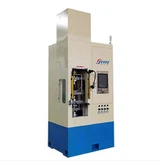
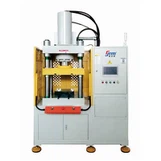
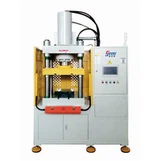
As a supplier of Electric Over Hydraulic Presses, I often encounter inquiries from customers about the versatility of our machines, particularly regarding their suitability for pressing composite materials. In this blog post, I'll delve into the technical aspects and practical considerations to answer the question: Can an electric over hydraulic press be used for pressing composite materials?
Understanding Composite Materials
Composite materials are engineered by combining two or more distinct materials with different physical or chemical properties. The resulting material has characteristics that are superior to those of the individual components. Common examples of composite materials include carbon fiber reinforced polymers (CFRP), glass fiber reinforced polymers (GFRP), and natural fiber composites. These materials are widely used in various industries, such as aerospace, automotive, marine, and sports equipment, due to their high strength-to-weight ratio, corrosion resistance, and design flexibility.
Working Principles of Electric Over Hydraulic Presses
Before discussing the compatibility of electric over hydraulic presses with composite materials, it's essential to understand how these presses work. An electric over hydraulic press combines the advantages of electric and hydraulic systems. The electric motor drives a hydraulic pump, which generates the hydraulic pressure needed to operate the press. This design offers precise control over the pressing force, speed, and stroke length, making it suitable for a wide range of applications.
The key components of an electric over hydraulic press include the electric motor, hydraulic pump, hydraulic cylinder, control system, and frame. The electric motor provides the power to drive the hydraulic pump, which converts mechanical energy into hydraulic energy. The hydraulic cylinder uses the hydraulic pressure to generate the pressing force, while the control system allows operators to adjust the pressing parameters according to the specific requirements of the application.
Advantages of Using Electric Over Hydraulic Presses for Composite Materials
There are several reasons why electric over hydraulic presses are well-suited for pressing composite materials:
Precise Force Control
Composite materials often require precise control over the pressing force to ensure proper consolidation and avoid damage to the fibers. Electric over hydraulic presses offer excellent force control, allowing operators to set and maintain the desired pressing force within a narrow tolerance. This precision is crucial for achieving consistent quality and performance in composite parts.
Adjustable Speed and Stroke Length
The pressing speed and stroke length can significantly affect the quality of composite parts. Electric over hydraulic presses allow operators to adjust these parameters according to the specific requirements of the material and the part design. For example, slower pressing speeds may be required for some composite materials to ensure proper resin flow and fiber alignment, while longer stroke lengths may be needed for larger parts.
Energy Efficiency
Compared to traditional hydraulic presses, electric over hydraulic presses are more energy-efficient. The electric motor only consumes power when the press is in operation, and the hydraulic system can be optimized to minimize energy losses. This energy efficiency not only reduces operating costs but also makes the presses more environmentally friendly.


Safety
Electric over hydraulic presses are equipped with advanced safety features, such as overload protection, emergency stop buttons, and safety guards. These features help to prevent accidents and ensure the safety of operators. In addition, the precise control over the pressing force and speed reduces the risk of damage to the material and the equipment.
Considerations for Using Electric Over Hydraulic Presses with Composite Materials
While electric over hydraulic presses offer many advantages for pressing composite materials, there are also some considerations that need to be taken into account:
Temperature Control
Composite materials often require specific temperature conditions during the pressing process to ensure proper curing and consolidation. Electric over hydraulic presses can be equipped with heating and cooling systems to control the temperature of the mold and the material. However, it's important to ensure that the temperature control system is accurate and reliable to avoid overheating or underheating the material.
Mold Design
The design of the mold plays a crucial role in the quality of composite parts. The mold should be designed to ensure proper resin flow, fiber alignment, and venting. Electric over hydraulic presses can accommodate a wide range of mold sizes and shapes, but it's important to ensure that the mold is compatible with the press and the pressing process.
Material Handling
Composite materials can be delicate and require careful handling to avoid damage. Electric over hydraulic presses can be equipped with automated material handling systems to improve efficiency and reduce the risk of damage. However, it's important to ensure that the material handling system is properly designed and maintained to ensure reliable operation.
Examples of Electric Over Hydraulic Presses for Composite Materials
At our company, we offer a range of electric over hydraulic presses that are suitable for pressing composite materials. One of our popular models is the 4 Post Hydraulic Press, which features a robust frame and precise force control. This press is ideal for pressing large composite parts, such as aerospace components and automotive body panels.
Another model that is well-suited for composite materials is the Hydraulic Baling Press Machine. This press is designed for compacting and baling composite materials, such as carbon fiber waste and glass fiber scrap. It offers high pressing force and efficient operation, making it a cost-effective solution for recycling composite materials.
For smaller composite parts, we recommend the 50 Ton Electric Hydraulic Press. This press is compact and easy to operate, making it suitable for research and development laboratories, small-scale production, and prototyping.
Conclusion
In conclusion, electric over hydraulic presses can be effectively used for pressing composite materials. Their precise force control, adjustable speed and stroke length, energy efficiency, and safety features make them well-suited for a wide range of composite applications. However, it's important to consider the specific requirements of the material and the part design when selecting a press and to ensure that the press is properly maintained and operated to achieve the best results.
If you're interested in learning more about our electric over hydraulic presses or have any questions about using them for pressing composite materials, please don't hesitate to contact us. Our team of experts is available to provide you with detailed information and technical support to help you find the right solution for your needs.
References
- "Composite Materials: Science and Applications" by P. K. Mallick
- "Handbook of Composites Manufacturing" by S. T. Peters
- "Advanced Composites Manufacturing" by J. Summerscales