Stamping dies are essential tools in the manufacturing industry, used primarily for shaping and cutting metal sheets into various forms. As a leading supplier of Stamping Presses, I've had the privilege of working with a wide range of stamping dies, each designed for specific applications and materials. In this blog, I'll explore the different types of stamping dies, their unique features, and the stamping presses that work best with them.
Simple Dies
Simple dies, also known as single-operation dies, are the most basic type of stamping dies. They perform one specific operation, such as punching, blanking, or bending, in a single stroke of the stamping press. These dies are relatively inexpensive to manufacture and are ideal for low-volume production runs.
Punching Dies: Punching dies are used to create holes in metal sheets. They consist of a punch and a die, where the punch is forced through the metal sheet to create a hole of a specific size and shape. Punching dies are commonly used in the automotive, electronics, and aerospace industries to create holes for bolts, screws, and other fasteners.
Blanking Dies: Blanking dies are used to cut out a flat piece of metal from a larger sheet. The blank is then used as a starting point for further processing, such as bending or forming. Blanking dies are often used in the production of coins, washers, and other flat metal parts.
Bending Dies: Bending dies are used to bend metal sheets into various angles and shapes. They typically consist of a punch and a die, where the punch applies pressure to the metal sheet to bend it over the die. Bending dies are commonly used in the production of brackets, frames, and other structural components.
When using simple dies, a C Frame Press is often a suitable choice. C Frame Presses are compact, versatile, and easy to operate, making them ideal for small to medium-sized production runs.
Progressive Dies
Progressive dies are more complex than simple dies and are designed to perform multiple operations in a single stroke of the stamping press. They consist of a series of stations, each performing a different operation, such as punching, blanking, bending, or forming. As the metal sheet moves through the die, it undergoes a series of progressive operations until the final part is produced.
Progressive dies are highly efficient and are capable of producing large quantities of parts in a short period of time. They are commonly used in the automotive, electronics, and appliance industries for high-volume production runs.
One of the key advantages of progressive dies is their ability to produce complex parts with high precision and accuracy. They also reduce the need for secondary operations, such as deburring and finishing, which can save time and money.
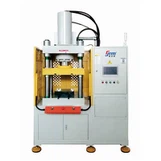
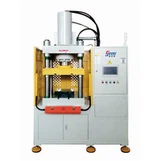
For progressive dies, a 4 Post Hydraulic Press is often the preferred choice. 4 Post Hydraulic Presses provide high tonnage, stability, and precision, making them suitable for the demanding requirements of progressive die stamping.
Compound Dies
Compound dies are similar to progressive dies in that they perform multiple operations in a single stroke of the stamping press. However, unlike progressive dies, compound dies perform all the operations simultaneously at a single station.
Compound dies are used to produce parts with complex shapes and features, such as gears, cams, and other precision components. They are capable of producing parts with high accuracy and repeatability, making them ideal for applications where tight tolerances are required.
One of the challenges of using compound dies is their high cost of manufacturing. They require precise machining and assembly to ensure that all the operations are performed accurately and simultaneously. However, the benefits of compound dies, such as increased productivity and reduced scrap, often outweigh the initial investment.
A Hot Hydraulic Press can be a good option for compound die stamping, especially when working with materials that require heat treatment or forming at elevated temperatures.
Transfer Dies
Transfer dies are used to transfer a partially formed part from one station to another in a stamping press. They are similar to progressive dies in that they perform multiple operations on a metal sheet, but instead of the sheet moving through the die, the part is transferred from one station to another using a transfer system.
Transfer dies are commonly used in the production of large, complex parts, such as automotive body panels and appliance housings. They are capable of producing parts with high precision and accuracy, and they can be used to perform a variety of operations, including punching, blanking, bending, and forming.
One of the advantages of transfer dies is their flexibility. They can be easily reconfigured to produce different parts, making them suitable for low to medium-volume production runs. However, transfer dies require a more complex setup and operation compared to other types of stamping dies.
Conclusion
In conclusion, there are several different types of stamping dies, each designed for specific applications and materials. Simple dies are ideal for low-volume production runs, while progressive dies are suitable for high-volume production. Compound dies are used for producing complex parts with high precision, and transfer dies are used for large, complex parts.


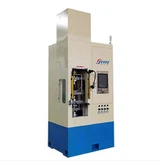
As a supplier of Stamping Presses, we understand the importance of choosing the right stamping die and press for your specific application. We offer a wide range of stamping presses, including 4 Post Hydraulic Press, C Frame Press, and Hot Hydraulic Press, to meet the diverse needs of our customers.
If you're interested in learning more about our stamping presses or need assistance in choosing the right stamping die for your application, please don't hesitate to contact us. Our team of experts is ready to help you find the best solution for your manufacturing needs.
References
- "Stamping Die Design Handbook" by Peter W. Weber
- "Metal Forming: Processes and Applications" by Kalpakjian and Schmid
- "Manufacturing Engineering and Technology" by Serope Kalpakjian and Steven R. Schmid