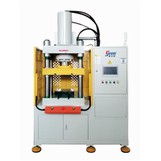
As a trusted supplier of Servo Hydraulic Press Machines, I'm often asked about the installation requirements for these powerful and precise pieces of equipment. In this blog post, I'll delve into the key aspects that need to be considered to ensure a successful installation of a servo hydraulic press machine.


1. Site Selection
- Space Requirements
- A servo hydraulic press machine needs adequate space for installation. The machine's dimensions, including its length, width, and height, must be carefully measured. Additional space should be reserved around the machine for easy access during operation, maintenance, and potential future upgrades. A general rule of thumb is to have at least 1 - 2 meters of clearance on all sides of the machine. For instance, if the press has a footprint of 2m x 3m, you should aim for a room with a floor area that can comfortably accommodate the machine plus the additional clearance space.
- The height of the room is also crucial. Some servo hydraulic press machines may have components that extend upwards, such as the ram or hydraulic cylinders. The room should be tall enough to ensure that there is no interference with the ceiling or other overhead structures.
- Foundation
- A solid foundation is essential for the proper functioning of a servo hydraulic press machine. The machine generates significant forces during operation, and any vibrations or uneven settling can affect its performance and accuracy. The foundation should be able to withstand the weight of the machine, as well as the dynamic loads generated during pressing operations.
- For smaller servo hydraulic press machines, a concrete slab with a minimum thickness of 150 - 200mm may be sufficient. However, for larger and more powerful machines, a deeper and more reinforced foundation may be required. The foundation should be leveled to within a tolerance of a few millimeters over the entire surface area of the machine's base.
2. Power Supply
- Electrical Requirements
- Servo hydraulic press machines typically require a three - phase electrical supply. The voltage and amperage requirements vary depending on the size and power of the machine. It's essential to ensure that the electrical supply at the installation site can meet these requirements. For example, a medium - sized servo hydraulic press may require a 400V three - phase supply with a current rating of 50 - 100A.
- The electrical wiring should be properly sized to handle the load and should comply with local electrical codes. A dedicated circuit breaker should be installed for the press machine to protect it from electrical overloads and short - circuits. It's also important to ensure that the electrical system is grounded correctly to prevent electrical hazards.
- Hydraulic Power Unit
- The hydraulic power unit of the servo hydraulic press requires a reliable power source as well. It usually consists of an electric motor driving a hydraulic pump. The motor size and power consumption are determined by the press's operating pressure and flow rate requirements. The hydraulic power unit should be installed in a well - ventilated area to prevent overheating, as the hydraulic system generates heat during operation.
3. Hydraulic System Installation
- Hydraulic Fluid
- The correct type and quality of hydraulic fluid are crucial for the proper operation of the servo hydraulic press machine. The fluid should have good lubricating properties, high viscosity index, and excellent chemical stability. Different machines may require different types of hydraulic fluids, so it's important to refer to the manufacturer's recommendations.
- The hydraulic fluid reservoir should be filled to the appropriate level, with some additional capacity for thermal expansion. A proper filtration system should be in place to remove contaminants from the hydraulic fluid, as impurities can cause damage to the hydraulic components.
- Hydraulic Piping and Hoses
- The hydraulic piping and hoses should be installed correctly to ensure proper fluid flow and pressure control. The pipes and hoses should be of the appropriate size and material to withstand the operating pressure of the hydraulic system. They should be installed in a way that minimizes bends and kinks, which can restrict fluid flow.
- All connections should be properly tightened to prevent leaks. It's a good practice to conduct a pressure test after the hydraulic system is installed to check for any potential leaks or pressure drops.
4. Control System Setup
- Servo Controller
- The servo controller is the brain of the servo hydraulic press machine. It controls the movement of the press ram, the pressure applied, and the speed of operation. The controller should be properly installed and programmed according to the specific requirements of the application.
- The servo controller needs to be connected to the various sensors and actuators on the press machine, such as the pressure sensor, position sensor, and hydraulic valves. The wiring should be neat and properly organized to avoid interference and signal loss.
- Operator Interface
- The operator interface is where the operator can input commands and monitor the operation of the press machine. It should be installed in a convenient location within reach of the operator. The interface should be easy to use, with clear display screens and intuitive controls. Training should be provided to the operators on how to use the control system effectively.
5. Safety Considerations
- Safety Guards
- Safety guards are a must - have for servo hydraulic press machines. They should be installed around the moving parts of the machine, such as the ram and the hydraulic cylinders, to prevent operators from coming into contact with them during operation. The safety guards should be made of strong and durable materials and should be properly secured.
- Interlock systems can be incorporated into the safety guards. If the guards are opened during operation, the machine should automatically stop to prevent accidents.
- Emergency Stop Buttons
- Emergency stop buttons should be installed at multiple locations around the press machine, including near the operator interface and other easily accessible areas. These buttons should be clearly marked and easily operable. When pressed, the emergency stop button should immediately cut off the power supply to the machine and stop all hydraulic operations.
6. Commissioning and Testing
- Initial Checks
- Before starting the commissioning process, a thorough visual inspection of the installed servo hydraulic press machine should be conducted. Check all the connections, such as electrical, hydraulic, and piping connections, to ensure they are secure. Also, check the alignment of the machine components and make any necessary adjustments.
- Function Testing
- Once the initial checks are completed, the machine should be powered on and subjected to function testing. Test the movement of the press ram, the operation of the hydraulic valves, and the accuracy of the sensors. Gradually increase the operating pressure and speed of the machine to ensure its stability and performance under normal operating conditions.
- During the testing process, monitor the temperature of the hydraulic fluid, the electrical components, and the machine itself. Any abnormal temperatures, noises, or vibrations should be investigated immediately.
In conclusion, the installation of a servo hydraulic press machine requires careful planning and attention to detail. By ensuring that all the installation requirements are met, you can ensure the reliable and efficient operation of the machine. If you are in the market for a Servo Hydraulic Press Machine, Hydraulic Servo Press, or Servo Mechanical Press, and need further assistance with installation or have any other questions, feel free to reach out to us to discuss your specific needs. We are here to support you every step of the way, from selection to installation and beyond.
References
- Manufacturer's installation manuals for servo hydraulic press machines.
- Industry standards for hydraulic and electrical systems in industrial machinery.