As a seasoned supplier in the stamping press industry, I've witnessed the evolution and divergence of mechanical and hydraulic stamping presses firsthand. These two types of presses serve the same fundamental purpose of shaping and forming metal, yet they possess distinct characteristics that set them apart. Understanding these differences is crucial for businesses looking to invest in the right equipment for their specific needs.
Mechanical Stamping Presses
Mechanical stamping presses are the workhorses of the manufacturing world, known for their speed, precision, and reliability. They operate on a mechanical drive system, typically powered by a flywheel and a crankshaft. When the press is activated, the flywheel stores energy, which is then transferred to the crankshaft. The crankshaft converts the rotational motion into linear motion, driving the ram down onto the workpiece to perform the stamping operation.
One of the primary advantages of mechanical stamping presses is their high speed. They can achieve rapid cycle times, making them ideal for high-volume production runs. For example, in the automotive industry, mechanical presses are commonly used to produce large quantities of stamped parts, such as body panels and engine components. Their ability to operate at high speeds ensures efficient production and reduces manufacturing costs.
Another significant benefit of mechanical stamping presses is their precision. The mechanical drive system provides consistent and accurate movement of the ram, resulting in high-quality stamped parts with tight tolerances. This precision is essential for applications where dimensional accuracy is critical, such as in the aerospace and electronics industries.
However, mechanical stamping presses also have some limitations. They are typically designed for specific stroke lengths and tonnage capacities, which can limit their flexibility. Once the press is set up for a particular job, it can be challenging and time-consuming to make adjustments for different part sizes or shapes. Additionally, mechanical presses generate a significant amount of noise and vibration during operation, which can be a concern in some work environments.
Hydraulic Stamping Presses
Hydraulic stamping presses, on the other hand, utilize a hydraulic system to generate the force required for stamping operations. They consist of a hydraulic pump, cylinders, and valves that work together to control the movement of the ram. When the press is activated, the hydraulic pump sends pressurized fluid to the cylinders, which then extend and retract to drive the ram up and down.
One of the key advantages of hydraulic stamping presses is their versatility. They can be easily adjusted to accommodate different stroke lengths, tonnage capacities, and part sizes. This flexibility makes them suitable for a wide range of applications, from small-scale prototyping to large-scale production. For instance, a hydraulic press can be used to produce everything from simple washers to complex automotive components.
Another significant benefit of hydraulic stamping presses is their ability to provide a constant force throughout the entire stroke. Unlike mechanical presses, which deliver a peak force at a specific point in the stroke, hydraulic presses can maintain a consistent force from the beginning to the end of the stroke. This feature is particularly useful for applications that require deep drawing or forming operations, as it helps to prevent cracking and other defects in the stamped parts.
Hydraulic stamping presses also offer better control over the stamping process. The hydraulic system allows for precise adjustment of the ram speed, force, and dwell time, which can be customized to meet the specific requirements of each job. This level of control enables manufacturers to achieve higher quality parts and improve overall production efficiency.
However, hydraulic stamping presses also have some drawbacks. They are generally slower than mechanical presses, which can limit their productivity in high-volume production environments. Additionally, hydraulic systems require regular maintenance to ensure proper operation and prevent leaks. The hydraulic fluid also needs to be changed periodically, which can add to the operating costs of the press.
Comparison of Mechanical and Hydraulic Stamping Presses
To better understand the differences between mechanical and hydraulic stamping presses, let's compare them based on several key factors:
Speed
Mechanical stamping presses are significantly faster than hydraulic presses. They can achieve cycle times of up to several hundred strokes per minute, making them ideal for high-volume production. Hydraulic presses, on the other hand, typically have slower cycle times, ranging from a few strokes per minute to around 60 strokes per minute.
Force
Both mechanical and hydraulic stamping presses can generate high forces, but the way they deliver the force is different. Mechanical presses deliver a peak force at a specific point in the stroke, while hydraulic presses can maintain a constant force throughout the entire stroke. This makes hydraulic presses more suitable for applications that require deep drawing or forming operations.
Precision
Mechanical stamping presses are known for their high precision and accuracy. The mechanical drive system provides consistent and repeatable movement of the ram, resulting in high-quality stamped parts with tight tolerances. Hydraulic presses also offer good precision, but they may require more careful setup and adjustment to achieve the same level of accuracy as mechanical presses.
Flexibility
Hydraulic stamping presses are more flexible than mechanical presses. They can be easily adjusted to accommodate different stroke lengths, tonnage capacities, and part sizes, making them suitable for a wide range of applications. Mechanical presses, on the other hand, are typically designed for specific stroke lengths and tonnage capacities, which can limit their flexibility.
Cost
The cost of a stamping press depends on several factors, including the type, size, and features of the press. Generally, mechanical stamping presses are less expensive than hydraulic presses, especially for smaller tonnage capacities. However, the cost of operating and maintaining a mechanical press can be higher due to the need for regular lubrication and replacement of mechanical components. Hydraulic presses, on the other hand, require more initial investment but may have lower operating costs in the long run due to their lower maintenance requirements.
Applications of Mechanical and Hydraulic Stamping Presses
The choice between a mechanical and hydraulic stamping press depends on the specific requirements of the application. Here are some common applications for each type of press:
Mechanical Stamping Presses
- Automotive Industry: Mechanical presses are widely used in the automotive industry to produce large quantities of stamped parts, such as body panels, engine components, and suspension parts.
- Aerospace Industry: The high precision and accuracy of mechanical presses make them suitable for producing aerospace components, such as turbine blades, aircraft frames, and landing gear parts.
- Electronics Industry: Mechanical presses are used to manufacture electronic components, such as connectors, switches, and circuit boards, where dimensional accuracy is critical.
Hydraulic Stamping Presses
- Prototyping and Small-Scale Production: The versatility of hydraulic presses makes them ideal for prototyping and small-scale production runs. They can be easily adjusted to accommodate different part sizes and shapes, allowing manufacturers to quickly produce samples and test new designs.
- Deep Drawing and Forming Operations: Hydraulic presses are well-suited for deep drawing and forming operations, where a constant force is required throughout the entire stroke. They are commonly used to produce products such as kitchen sinks, automotive fuel tanks, and metal containers.
- Large-Scale Production of Complex Parts: Hydraulic presses can be used for large-scale production of complex parts that require multiple operations or special forming techniques. They can be equipped with advanced control systems and automation features to improve productivity and quality.
Conclusion
In conclusion, both mechanical and hydraulic stamping presses have their own unique advantages and disadvantages. Mechanical presses are known for their speed, precision, and reliability, making them ideal for high-volume production of simple parts. Hydraulic presses, on the other hand, offer greater versatility, flexibility, and control, making them suitable for a wide range of applications, including prototyping, deep drawing, and large-scale production of complex parts.
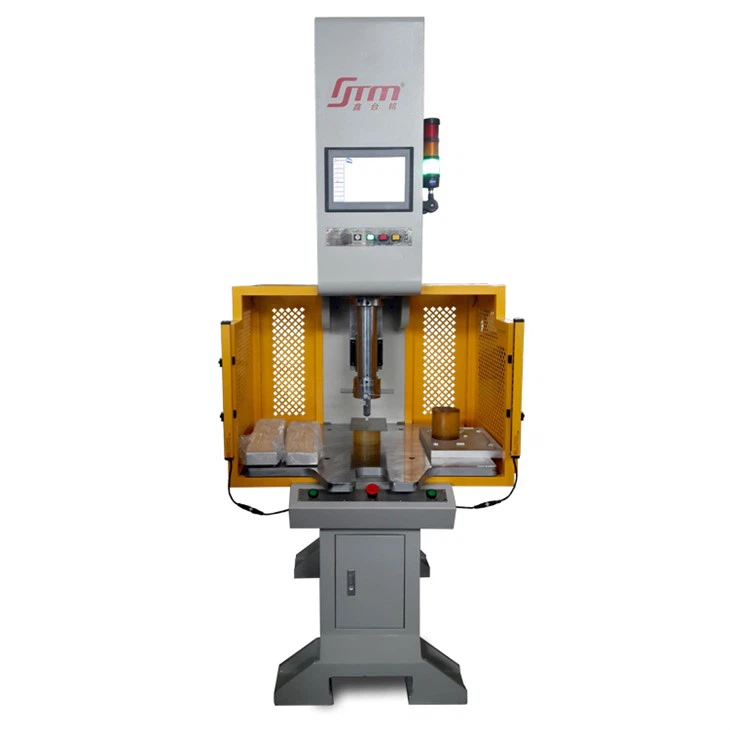
As a supplier of stamping presses, we understand the importance of choosing the right equipment for your specific needs. We offer a wide range of mechanical and hydraulic stamping presses, including 20 Ton Press, 4 Post Hydraulic Press, and C Frame Press, to meet the diverse requirements of our customers. Our team of experts can help you select the most suitable press for your application and provide you with comprehensive support and service throughout the entire process.
If you are interested in learning more about our stamping presses or would like to discuss your specific requirements, please feel free to contact us. We look forward to working with you to find the perfect solution for your manufacturing needs.

References
- "Stamping Presses: Types, Applications, and Selection Criteria" by John Doe
- "Hydraulic Presses: Principles, Design, and Operation" by Jane Smith
- "Mechanical Presses: Theory and Practice" by Robert Johnson